
.svg)









 Affordable Financing
 Fibreglass Pool Install Stages
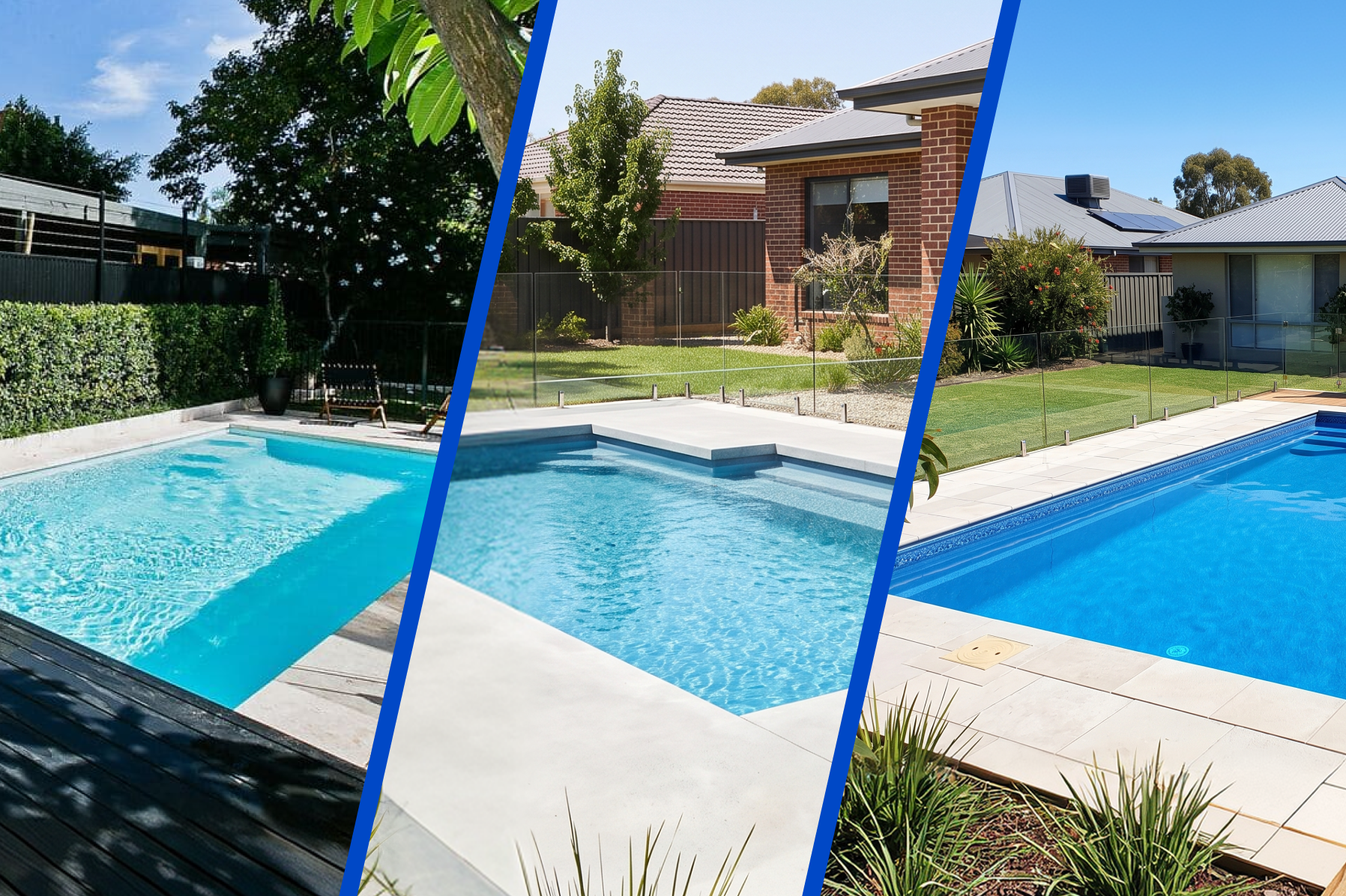
Fibreglass, concrete or vinyl. It's the first real fork in any pool project, and the three aren't just different price tags. They're different products, built in completely different ways, and that difference drives everything else. Here's the straight comparison: what each one costs to own over 20 years, how it copes with the Australian climate, how much of your weekend it wants, and which way buyers are actually leaning in 2026.
Whether you're DIYing the install with your own trades or handing the lot to a licensed builder, the comparison below applies the same way.
|
Quick Answer Fibreglass now makes up more than half of the new in-ground pools going into Australian backyards, and it's not hard to see why. The shell drops in on a single crane day, the whole build runs in weeks rather than the months concrete takes, it's cheaper to run, and it's easier to keep clean. It also tends to be the most buyer-friendly and cost-effective option at resale, although concrete can still have an edge at the bespoke top end. |
The Three Pool Types Defined
Before the trade-offs, a quick definition pass. Partly because the marketing on each one gets loose, and partly because the way each pool is built shapes every comparison that follows.
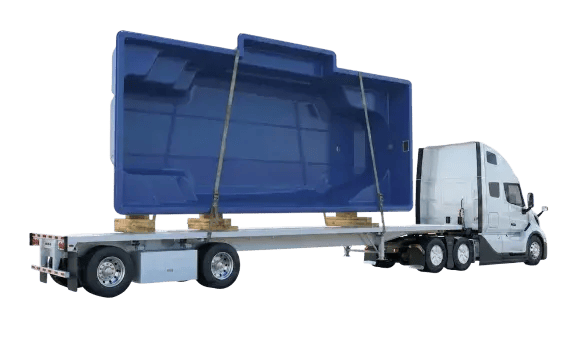
Fibreglass pools are factory-moulded, single-piece composite shells. Layers of fibreglass and gel coat are sprayed into a rigid mould, cured in a controlled environment, then the finished shell is trucked to your block. It arrives on a crane, drops into the hole, and gets plumbed in on site. The shell is the finished product; everything on site is just getting it into the ground.
Concrete pools (you'll hear them called gunite, shotcrete or cement-render) are built in place. The hole is dug, steel is tied, concrete is sprayed under high pressure to form the walls and floor, then it cures for several weeks before a finish goes on top: pebble, tile, plaster or quartz. Every one is a custom build from the ground up, with no two exactly alike.
Vinyl-liner pools use a steel, polymer or aluminium frame as the structure, with a printed PVC liner stretched over it as the waterproof surface. The liner is the watertight layer, and it gets replaced periodically. Vinyl is far less common here than in North America. Most Australian “vinyl” pools are above-ground designs from the budget end of the market.
Industry-wide, fibreglass is now the majority pick for new in-ground pools, concrete sits second, and vinyl takes a small slice. That's a recent shift. Twenty years ago concrete had the bigger share, and the reasons it lost ground are what the rest of this guide is about.
What Australians Actually Buy (and Why Fibreglass Won the 2020s)
The headline shift is simple. Fibreglass has gone from roughly line-ball with concrete in the early 2000s to more than half of new in-ground sales today. We dig into the full story in why most Australians now choose fibreglass over concrete, but the short version comes down to five things.
-
Speed. A typical fibreglass build involves 7 to 14 active working days spread across roughly two to four calendar weeks, rather than the months a concrete build eats up. When summer's short and the kids are already asking, that counts for a lot.
-
Cost. On a like-for-like pool, fibreglass usually comes in cheaper, often around 20–40% less upfront, and cheaper again once it's in the ground.
-
Maintenance. The gel-coat surface is smooth and non-porous, so algae struggles to get a grip and your water chemistry holds steadier than it does on porous concrete.
-
Predictability. A shell cured in a factory to a known warranty beats a pool poured in your backyard, where the result rides on the weather and the crew on the day.
-
DIY. Fibreglass is the only one of the three a handy owner-builder can realistically install themselves. Concrete needs licensed builders from go to whoa.
Concrete still has a home at the top end, where a bespoke shape, a custom feature or a big infinity edge is the whole point. For a standard family pool, though, fibreglass has quietly become the default, and it's the numbers that got it there.
Installation Time: 2–4 Weeks vs 3–6 Months
This is where the gap really shows. A fibreglass pool, from first dig through to a compliant fence, certification and water, generally involves 7 to 14 days of active work spread across about three to four calendar weeks on a textbook job. A confident owner-builder completing a straightforward project can sometimes do it in around two weeks. The same-size concrete pool typically involves 12 to 16 weeks of on-site construction and around three to six months for the completed project.
Our full breakdown of pool installation time: 2–4 weeks vs 3–6 months walks through it stage by stage, and the complete step-by-step lives in our Fibreglass Pool Installation Guide. The big-picture version looks like this:
|
Stage |
Fibreglass |
Concrete |
Vinyl-liner |
|
Excavation and site preparation |
Generally begins in week one; excavation is commonly completed in one day |
Generally weeks one to two |
Completed during the early stage of the build |
|
Shell or structural construction |
Finished shell placed in one crane day |
Steel, formwork and shotcrete generally take place during the first four weeks, followed by curing |
Frame, base and liner assembled on site |
|
Plumbing, backfill and early works |
Generally completed during week one |
Completed in stages throughout the build |
Completed within the active build period |
|
Finish, coping, surrounds and fencing |
Generally completed during weeks two to four |
Commonly continues through weeks five to 16 |
May continue after the shell and liner are installed |
|
Typical active construction time |
7–14 working days |
12–16 weeks |
5–14 working days |
|
Typical completed project timeframe |
Around 3–4 calendar weeks after the first dig, subject to weather and trade availability |
Around 3–6 months |
May extend beyond the active build if surrounds or fencing are delayed |
Stretch the comparison to include council approval at the front and certification at the back, and the gap narrows a bit, since you're waiting on council either way. But the disruption is a different beast. Fibreglass generally hands your backyard back in three to four weeks. Concrete parks a building site outside your living-room window for the better part of a season.
Customisation and Design Flexibility
This is the one area where concrete still has a clear lead, though the gap's smaller than most people think. A concrete pool can be any shape, depth or size, with built-in shelves, ledges, vanishing edges and raised spas limited mostly by the engineer's imagination. You just pay for that freedom in time and dollars.
Fibreglass shells come in set shapes, but the Australian range is wide now: rectangles, freeforms, plunges, lap pools, L-shapes and most of the popular layouts. Work through fibreglass pool customisation options vs concrete and most people find the design they had in mind for a “custom concrete pool” already exists off the shelf in fibreglass, for less money and a fraction of the build time.
The real gap is at the genuinely custom end. A swim-up bar, a baja shelf with spa jets or an organic shape wrapped around a sloping block is still concrete country. The good news for the resort look is that fibreglass infinity pools are possible with caveats. A single straight spillover edge can be achieved using a purpose-engineered hybrid design that combines a standard fibreglass shell with a concrete spillover edge, catch basin and balance tank. It can land well under the equivalent concrete build, but a true knife-edge, wraparound vanishing edge or fully custom infinity-pool geometry is still concrete country.
Our advice is the same we'd give anyone renovating a kitchen. Nail down your dream design first, then work out whether it genuinely needs a custom build, or whether an off-the-shelf shape does the job for a lot less.
Maintenance: Which Pool Type is Easiest to Look After?
Maintenance is where fibreglass quietly saves you the most, and where concrete owners feel the difference every weekend.
That smooth, non-porous gel coat doesn't give algae anywhere to anchor, holds your chemistry steadier, and skips the acid-washing a concrete surface needs every few years. Our full easiest pool type to maintain breakdown goes task by task, but the pattern looks like this:
-
Weekly time. Fibreglass: around half an hour of skimming and testing. Concrete: closer to 45 to 60 minutes, with proper brushing along the rougher walls.
-
Chemicals. Fibreglass gets by on roughly 20–30% fewer, because the surface doesn't drink them up.
-
Equipment. Line-ball across all three. The pumps, filters and chlorinators are the same gear.
-
Resurfacing. Fibreglass doesn't have a scheduled resurfacing cycle. The gel coat generally lasts the structural life of the shell, although cosmetic polishing, restoration or an eventual recoat may sometimes be wanted. Concrete needs a re-plaster or re-pebble every 10 to 15 years ($6,000 to $15,000 as a guide). Vinyl needs a new liner every 5 to 10 years ($3,000 to $6,000).
As a guide, routine annual upkeep lands at about $500 to $800 for a fibreglass pool against $1,200 to $2,000 for concrete. Over 20 years that's a $15,000 to $30,000 difference before you even count concrete's resurfacing. The AquaGuard-X™ gel coat helps the surface retain its appearance for decades with proper care. CFPK shells carry a 35-year structural warranty, while concrete structural warranties commonly run for around seven years, with some premium builders offering up to 10 years.
Maintenance is where fibreglass quietly saves you the most, and where concrete owners feel the difference every weekend.
-
Weekly time. Fibreglass: around half an hour of skimming and testing. Concrete: closer to 45 to 60 minutes, with proper brushing along the rougher walls.
-
Chemicals. Fibreglass gets by on roughly 20–30% fewer, because the surface doesn't drink them up.
-
Equipment. Line-ball across all three. The pumps, filters and chlorinators are the same gear.
-
Resurfacing. Fibreglass doesn't have a scheduled resurfacing cycle. The gel coat generally lasts the structural life of the shell, although cosmetic polishing, restoration or an eventual recoat may sometimes be wanted. Concrete needs a re-plaster or re-pebble every 10 to 15 years ($6,000 to $15,000 as a guide). Vinyl needs a new liner every 5 to 10 years ($3,000 to $6,000).
As a guide, routine annual upkeep lands at about $500 to $800 for a fibreglass pool against $1,200 to $2,000 for concrete. Over 20 years that's a $15,000 to $30,000 difference before you even count concrete's resurfacing. The AquaGuard-X™ gel coat helps the surface retain its appearance for decades with proper care. CFPK shells carry a 35-year structural warranty, while concrete structural warranties commonly run for around seven years, with some premium builders offering up to 10 years.
Lifetime Cost: The 20-Year Maths
The sticker price is one number. The one that actually counts is what the pool costs you over the years it sits in the backyard. Our full Pool Lifetime Cost Comparison: Which Pool Offers the Best Value Over 20 Years? works through the inputs, but as a rough guide for a mid-size (about 7m) family pool, here's the shape of it:
|
Cost line |
Fibreglass |
Concrete |
Vinyl-liner |
|
Upfront installed cost for a mid-size pool |
$45,000–$60,000 |
$75,000+ |
$25,000–$35,000 |
|
Routine annual upkeep* |
$500–$800 |
$1,200–$2,000 |
$800–$1,200 |
|
Routine upkeep over 20 years |
$10,000–$16,000 |
$24,000–$40,000 |
$16,000–$24,000 |
|
Major surface event over 20 years |
No scheduled resurfacing; cosmetic polishing or restoration may occasionally be required |
One resurface after approximately 10–15 years: $6,000–$15,000, potentially more for larger pools or premium finishes |
Two or three liners: approximately $6,000–$21,000 |
|
Structural warranty |
CFPK: 35 years |
Commonly around seven years; some premium builders offer up to 10 years |
Generally around five years; some premium suppliers offer up to 10 years |
|
Surface or cosmetic warranty |
CFPK: six years standard or 20 years with MarbleTech |
Varies by builder and finish |
Varies; check whether coverage is full or prorated |
|
Indicative 20-year subtotal* |
$55,000–$76,000 |
$105,000–$130,000+ |
$47,000–$80,000 |
*These figures are a 2026 planning guide for a mid-size pool. The indicative subtotal includes installation, routine pool-type-dependent upkeep and scheduled surface or liner replacement. It excludes financing, inflation, professional servicing, optional heating, insurance, water, landscaping repairs and major pool-equipment replacement.
Vinyl may produce the lowest cash subtotal in a lower-cost scenario, but fibreglass offers the strongest balance of predictable ownership costs, low routine maintenance, long surface life and fewer major replacement events. Concrete sits well above both once you fold in resurfacing and the higher routine running costs.
The full lifecycle, including how running costs shift by climate zone, is in our Complete Fibreglass Pool Cost Guide.

Australian Weather and Climate Suitability
Australia throws a lot at a pool. Brutal summer UV, tropical humidity, coastal salt, dry inland heat, frosts in the southern highlands and reactive clay under plenty of Australian backyards. The right answer for Hobart isn't the right answer for Townsville. Our climate-by-state look at the best pool type for Australian weather runs through each one.
Tropical heat and UV. Fibreglass gel coat is built for sun, and a quality finish can retain its appearance for decades with proper care. The non-porous surface also resists the heavier algae load that comes with warm tropical water. Concrete works in the tropics but needs more brushing and chemical attention, while sustained UV and heat can shorten vinyl-liner life. Our pool durability in extreme heat piece shows fibreglass coming out on top over the long haul.
Temperate conditions. All three types perform well in most temperate Australian markets. Fibreglass maintains its low chemical demand, concrete has less algae pressure than it does in the tropics, and cooler temperatures can extend vinyl-liner life.
Coastal salt and spray. Coastal conditions hit the equipment and exposed metalwork more than the pool surface. Fibreglass gel coat, a correctly specified concrete finish and the vinyl liner itself all cope with salt exposure. With vinyl, the wall system behind the liner matters: polymer or properly galvanised panels are a better coastal choice than bare steel. Whatever the pool type, specify salt-resistant equipment, marine-grade fencing and suitable exposed fittings.
Hot inland conditions. Fibreglass handles sustained heat well, although sensible gel-coat colour selection and a pool cover help control water temperature and evaporation. Concrete's mass can steady the temperature, but heavy evaporation concentrates salts and makes chemistry harder to manage. Extreme UV shortens vinyl-liner life.
Cold and frost. All three can work in colder Australian regions. Fibreglass's slightly flexible shell is generally more forgiving of freeze-thaw movement than rigid concrete. Plumbing still needs to be protected wherever sustained freezing is possible.
Clay soil and ground movement. Fibreglass is generally the more forgiving choice on reactive clay because the composite shell has a little give. A rigid concrete structure is more prone to cracking as the ground moves. Difficult sites still need appropriate engineering, drainage and installation to specification.
The upshot: fibreglass is the most forgiving across the whole map. Concrete matches it in temperate climates but works harder in the tropics and on clay. Vinyl suits cooler states and above-ground setups best; sustained tropical heat and an unsuitable steel wall system near the coast count against it.
Above-Ground Alternatives
Most pool-type talk assumes an in-ground build, but above-ground fibreglass is a real slice of the market, especially on sloping or rocky blocks, or where the excavation bill for going in-ground gets ugly. Our above-ground vs in-ground fibreglass pools piece covers the engineering, the cost gap, and how to make an above-ground pool look like a deliberate choice rather than a compromise.
A purpose-built above-ground fibreglass shell will generally cost more than a comparable standard in-ground shell because it requires additional materials, reinforcement and engineering to support the weight of the water without surrounding backfill. That higher shell cost is offset by the easier and generally lower-cost installation.
An above-ground installation can reduce or eliminate deep excavation, cement-stabilised backfill and the concrete bond beam. It earns its keep on sites where going in-ground would hurt, such as Sydney sandstone, rocky ground or a steep block. It isn't automatically cheaper on every site, because you may still spend on base preparation, decking, cladding, stairs and a compliant pool barrier. Reactive clay also still requires proper site preparation, drainage and compliance with the supplied engineering.
Only a fibreglass shell specifically designed and engineered for freestanding use should be installed above ground. A standard in-ground shell relies on the surrounding backfill for support and should not simply be placed above ground and dressed up with decking.
Weight makes a major difference when comparing freestanding fibreglass with precast concrete. A precast concrete pool can weigh up to 10,000kg, making it expensive to deliver and very expensive to crane into place. On a difficult site, the crane alone can cost up to $15,000. Precast concrete pools are also flat-bottomed and generally shallow.
By comparison, an 8m CFPK freestanding fibreglass pool weighs approximately 2,000kg. Depending on location and access, delivery and crane placement will generally cost around $1,500 to $3,000. The range includes full-size pools with greater width and depth than most precast concrete options, including models with a shallow end and deep end.
Vinyl above-ground is common at the budget end, but it won't go the distance like a purpose-built fibreglass one.
Resale Value: Which Pool Type Adds Most to Property Value?
Resale is where what buyers expect and what actually happens tend to part ways. Across most Australian markets, location, presentation and condition matter more than construction type. Fibreglass is often the most buyer-friendly and cost-effective per dollar of value added because it combines a modern appearance with low maintenance and predictable long-term costs. Concrete carries a small edge mainly at the top end of the custom-design market. Our which pool type adds more resale value deep-dive breaks it down by market.
The gap shows up in condition and life left. A well-kept fibreglass pool with its surface intact looks like a pool that's easy to own for years to come. A concrete pool approaching resurfacing looks like a project, with a $6,000 to $15,000 bill hanging over the next owner. Condition drives the resale gap more than the badge on the shell.
Vinyl sits lowest for resale in most markets, partly because of the liner-replacement cost and partly because buyers in family-pool suburbs expect in-ground fibreglass or concrete. A visibly aged liner can look like an approaching expense.
So don't pick any pool type for resale alone. A pool is primarily a lifestyle spend with a partial rebate when you sell. If resale matters, fibreglass offers the strongest balance of installation cost, buyer appeal and predictable future upkeep. Concrete can justify its premium where a genuinely bespoke pool forms part of a top-end outdoor area.
Decision Framework: Which Pool Type Suits You?
A quick five-question gut check:
-
Swimming in two to four weeks or three to six months? Fibreglass is weeks. Concrete is months. Vinyl is quick too, but your choices are limited.
-
Is the design genuinely custom—a true knife-edge or wraparound infinity pool, a swim-up bar or an asymmetric shape? If yes, concrete. If no, fibreglass.
-
What's your 20-year budget tolerance? Vinyl may produce the lowest cash subtotal in a lower-cost scenario, but fibreglass offers the strongest balance of cost, maintenance and major replacement risk. Concrete runs higher once resurfacing and routine running costs land.
-
Tropical, coastal or reactive clay? Fibreglass is the most forgiving. Concrete needs more upkeep in the tropics and careful engineering on clay. Vinyl is a poor fit for sustained heat, and the wall system needs to be specified carefully near salt.
-
Keen to DIY? Fibreglass is the only one a competent owner-builder can realistically self-install.
Three or more pointing to fibreglass and you're where most Australian buyers land. Two or more to concrete and you're shopping the premium end. Vinyl is rarely the right call for a new in-ground build in 2026.
CFPK supplies fibreglass pool kits built for Australian conditions. We don't make concrete or vinyl, and we've laid them out honestly here because picking the right type of pool matters more than picking a brand. If fibreglass is where you land, send through your block size, access and a rough sketch and we'll help you spec the right kit.
Doing it yourself with your own trades, or handing it to a licensed installer? Either works, the kit's the same, and we have an installer network if you'd rather not project-manage it.
Send us your block details and get help specifying the right pool kit.

Frequently Asked Questions
Are fibreglass pools cheaper than concrete? Almost always, yes. On a like-for-like pool, fibreglass runs about 20–40% cheaper upfront, and the gap widens over 20 years because concrete needs resurfacing every 10 to 15 years ($6,000 to $15,000 a go, as a guide).
Do fibreglass pools last as long as concrete? A well-installed fibreglass pool with a quality gel coat like AquaGuard-X™ lasts 35-plus years, and the shell's structural warranty runs to 35 years on CFPK kits. Concrete lasts a long time structurally too, but its surface needs redoing every 10 to 15 years. Concrete structural warranties commonly run for around seven years, with some premium builders offering up to 10 years.
Can I install a fibreglass pool myself but not a concrete one? Right. Fibreglass kits are made for owner-builder installs; concrete needs licensed builders for the steel-fixing, shotcrete and finishing. Most CFPK customers self-install and bring in licensed trades for the bits that legally need them.
Why is vinyl rare in Australia compared to North America? Climate and resale. Our UV and heat are harder on liners than the cooler North American climate, replacement costs stack up over time, and Australian buyers lean towards in-ground fibreglass or concrete in family suburbs.
Does pool type affect property value at resale? It can, but location, presentation and condition are usually the bigger levers. Fibreglass is often the most buyer-friendly and cost-effective per dollar spent. Concrete can carry an edge in top-end markets where the pool is a genuinely custom part of a premium outdoor area. Vinyl can drag resale if the liner looks aged or is approaching replacement.
Related Helpful Content
-
Why Most Australians Now Choose Fibreglass Over Concrete (and Why It Keeps Climbing)
-
Customisation Options: Fibreglass vs Concrete Pools (What You Can Actually Change)
-
Pool Lifetime Cost Comparison: Which Pool Offers the Best Value Over 20 Years?
-
Pool Resale Value: Which Pool Type Adds More to Your Property?
-
Above Ground vs In-Ground Fibreglass Pools (Pros, Cons and Costs)
-
Pool Durability in Extreme Heat: Fibreglass vs Concrete (Australian Reality Check)


