.svg)








 Affordable Financing
 Below Ground Range Colours
 Fibreglass Pool Install Stages
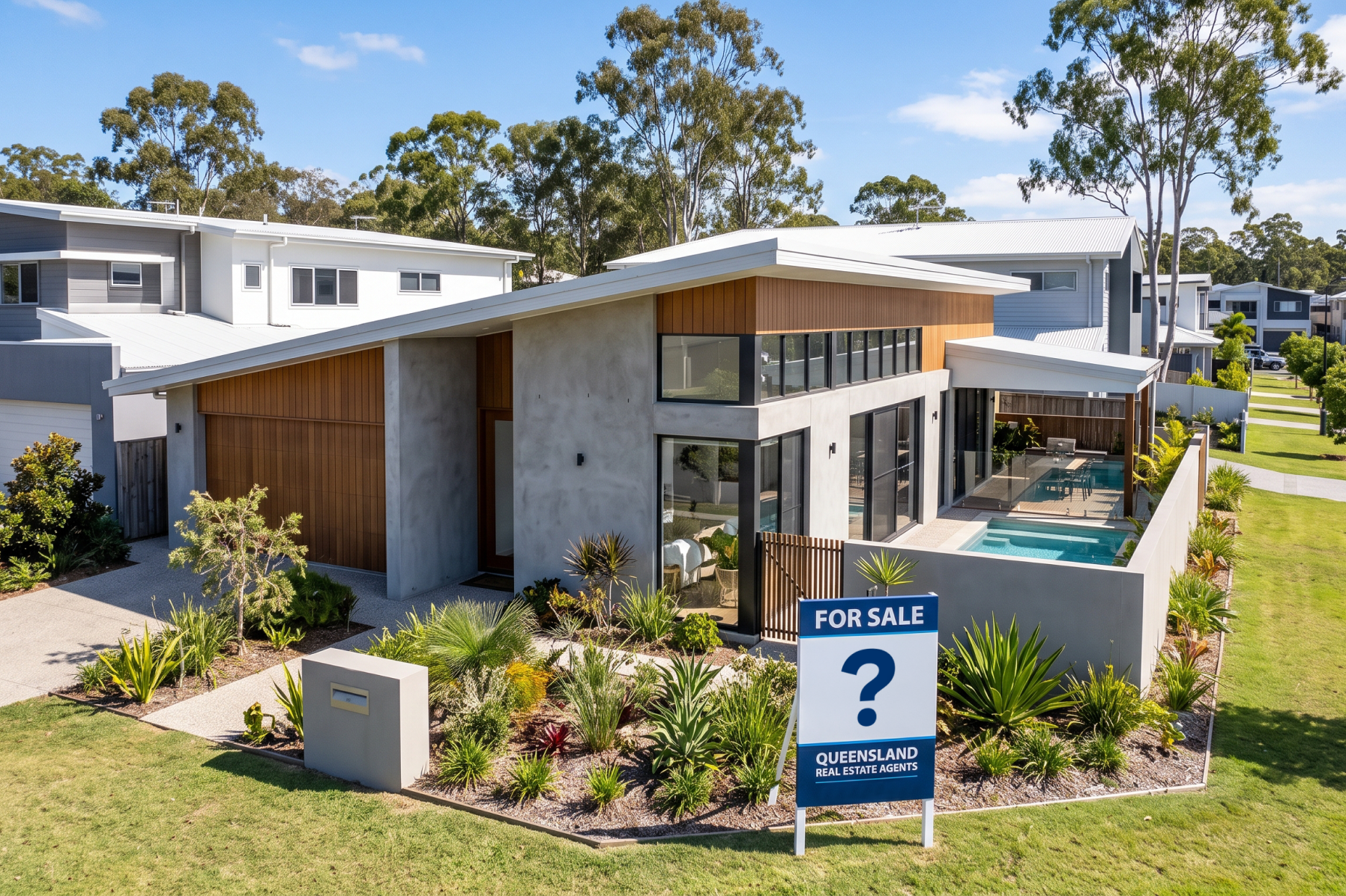
Ask three people whether a pool adds value and you'll get three answers. The agent says yes (they want the listing), the buyer's agent says it depends (closer to the truth), and the pool builder says absolutely (they want the sale).
The honest version is that it depends, and that pool type matters less than people think. Resale is the question every buyer eventually asks, and it's the same one running under our Fibreglass vs Concrete vs Vinyl Pools comparison.
Whether you DIY the pool or use a licensed builder, the resale rules are the same. A well-presented, compliant pool reads well to buyers regardless of who installed it, provided the work was completed correctly and the required approvals and certification records can be produced.
|
Quick Answer Across most Australian markets, location, presentation and condition matter more than construction type. A well-designed pool generally leans positive in pool-friendly suburbs and warm climates and closer to neutral in cooler markets. Fibreglass is often the most buyer-friendly and cost-effective per dollar of value added because it combines a modern appearance with low maintenance and predictable long-term costs. Concrete carries a small edge only at the top end of the custom-design market. Vinyl can drag resale if the liner is visibly aged or approaching replacement. |
The Honest Story on Pools and Resale
A pool can lift a property's value, but the lift isn't a guaranteed line item, and it's rarely a full recovery of what you spent. It depends on the house, the location, the climate, the buyer pool and how well the pool is integrated into the rest of the property.
-
Pool-friendly, warm-climate suburbs. A pool is often expected on a family home, and adds genuine appeal, not having one can actually count against the sale.
-
Marginal markets. In cooler southern suburbs, on smaller blocks and in areas where pools aren't standard, the effect may be smaller or closer to neutral.
-
Cool-climate, inner-city markets. On a tight block where the pool eats most of the yard, the pool can work against the sale if buyers see it as a burden rather than a benefit.
Treat the value-add as a bonus, not the reason you build. A pool that costs a lot and returns some of it at sale is really a lifestyle spend with a partial rebate, and that's the honest way to think about it.
What Buyers Actually Notice
Here's the bit that surprises most sellers: buyers often respond to the presentation of a pool before they focus on its construction type. The shape, the colour, the surrounds and the clarity of the water register straight away. The shell construction registers later. What lands first:
-
Visual cleanliness. Clear water, clean coping, tidy fencing.
-
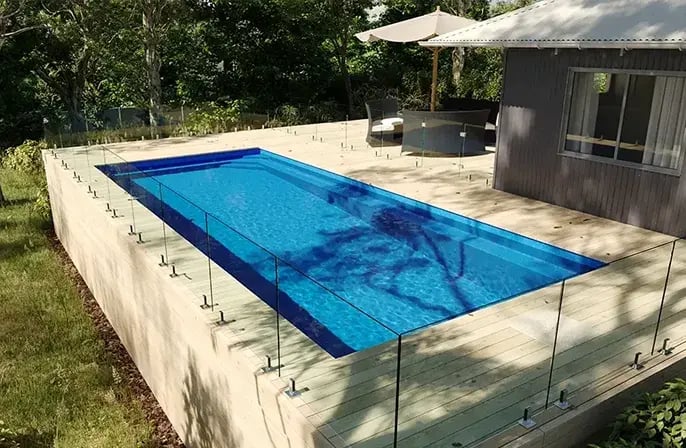
A modern look. Glass fencing reads new; old tube fencing reads 1990s.
-
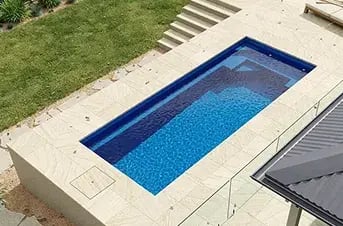
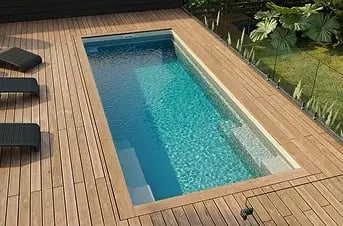
Surround quality. Travertine and timber decking beat exposed grey concrete.
-
Pool-to-yard fit. A pool that suits the space reads better than one that crowds it.
-
Water clarity. A green-tinged pool says “this needs work”, whatever it's made of.
Pool type and condition tend to surface later, when a buyer reviews the maintenance requirements, warranties and inspection results. By then the buyer's usually committed. The practical takeaway: to get the most resale out of any pool, don't ignore the surrounds and presentation. They can have more immediate impact than paying extra for a different shell purely for resale.
A tidy fibreglass pool with travertine and glass fencing presents better at sale than a pricier concrete pool with cracked, exposed-concrete coping.
Compliance: The Real Sale-Day Risk
The single biggest threat to a pool's resale contribution isn't construction type, it's a non-compliant barrier. Australian pools are subject to state and territory safety laws that draw on AS 1926.1, with different registration, inspection and sale-document requirements. A current compliance certificate is not universally required at settlement in every state, but missing documentation or a non-compliant barrier can still delay a sale, trigger disclosure obligations or leave the buyer responsible for obtaining certification and completing rectification work.
A fence that's been allowed to slide can slow the sale, cost a fair bit to bring up to standard, and tangle up insurance and council records while it's sorted.
If you're planning to sell within the next couple of years and the fence hasn't been inspected recently, get it checked now rather than at sale time. The same goes for required pool registration, CPR signage and any certification records with expiry dates. The exact requirements vary by state or territory. None of it is pool-type-dependent.

Cost Per Dollar of Value Added
This is where pool type genuinely affects the resale maths. As a rough guide, a mid-size pool runs about $45,000 to $60,000 installed in fibreglass, $25,000 to $35,000 in vinyl, and $75,000 and up in concrete.
These are broad 2026 planning figures for a full-service installation on a straightforward site with broadly comparable basic inclusions. Quote inclusions vary, so compare fencing, paving, landscaping, approvals and equipment like-for-like.
Since construction type alone rarely determines the sale premium in a given suburb, spending more on the pool doesn't guarantee a larger return at sale. The cheaper-to-install options can therefore come closer to washing their face.
Fibreglass usually gets nearest to paying for itself because it combines a mid-range installation cost with strong buyer appeal and low future upkeep. Lower-cost vinyl can also perform well if the liner is in good condition, but an older liner may be viewed as an approaching replacement cost. Concrete rarely recovers its full build cost unless it's a genuine premium custom design in a top-end market.
If maximum resale per dollar spent is the goal, fibreglass with quality surrounds is the sweet spot. The full ownership maths sits in Pool Lifetime Cost Comparison: Which Pool Offers the Best Value Over 20 Years? and the Complete Fibreglass Pool Cost Guide.
Features That Lift Buyer Interest
The features that tend to lift buyer interest include:
-
Glass or frameless fencing. Reads modern, doesn't visually shrink the yard.
-
Quality stone or travertine coping. Plain grey concrete coping reads dated.
-
Pool heating, in markets where it genuinely extends the season.
-
LED lighting, especially colour-changing.
-
An integrated water feature. Reads premium without breaking the bank.
-
Modern, energy-efficient equipment, including a variable-speed pump and robotic cleaner. Practical, and signals the pool's been looked after.
-
Equipment housing that hides the pumps and chlorinator.
Neutral or negative at sale: faded or damaged pool surfaces, unusual shapes that limit furniture placement, deep diving-pool depths (a worry for buyers with little kids), outdated equipment and any missing safety feature.
Planning a Pool with Resale in Mind?
Start with a pool that suits the block, leaves enough usable yard and will still look easy to own when the next buyer walks through.
Talk to the team at Complete Fibreglass Pool Kits about choosing the right fibreglass pool size, finish and equipment for your property. We'll help you compare the options without pretending the pool will magically pay for itself at sale.

Frequently Asked Questions
Does a pool add value to an Australian home? It can, and it leans positive in pool-friendly suburbs and warm climates, closer to neutral in cooler markets. But it's rarely a full recovery of what you spent, and it varies with region, climate and how well the pool fits the property.
Does a fibreglass pool add as much value as a concrete pool? In most markets, yes. Fibreglass may be more buyer-friendly because it presents well, is easier to maintain and creates fewer concerns about future resurfacing costs. Concrete can carry an edge in top-end markets where a genuinely custom design forms part of a premium outdoor area.
Will an old pool hurt my home's value? It can, if it looks aged or neglected. Faded surfaces, cracked coping or a non-compliant fence all signal a repair bill to buyers.
What's the cheapest way to lift a pool's resale value? Check the pool and barrier compliance requirements for your state, tidy the surrounds, and make sure the pool is clean and clear in the listing photos. Presentation does more for buyer impression than the shell underneath.
Are homes with pools harder to sell? They can be if the pool dominates the yard, looks expensive to maintain or doesn't suit the likely buyer. In warm, pool-friendly suburbs the opposite is often true, no pool can be the deal-breaker.


