
.svg)










 Affordable Financing
 Fibreglass Pool Install Stages
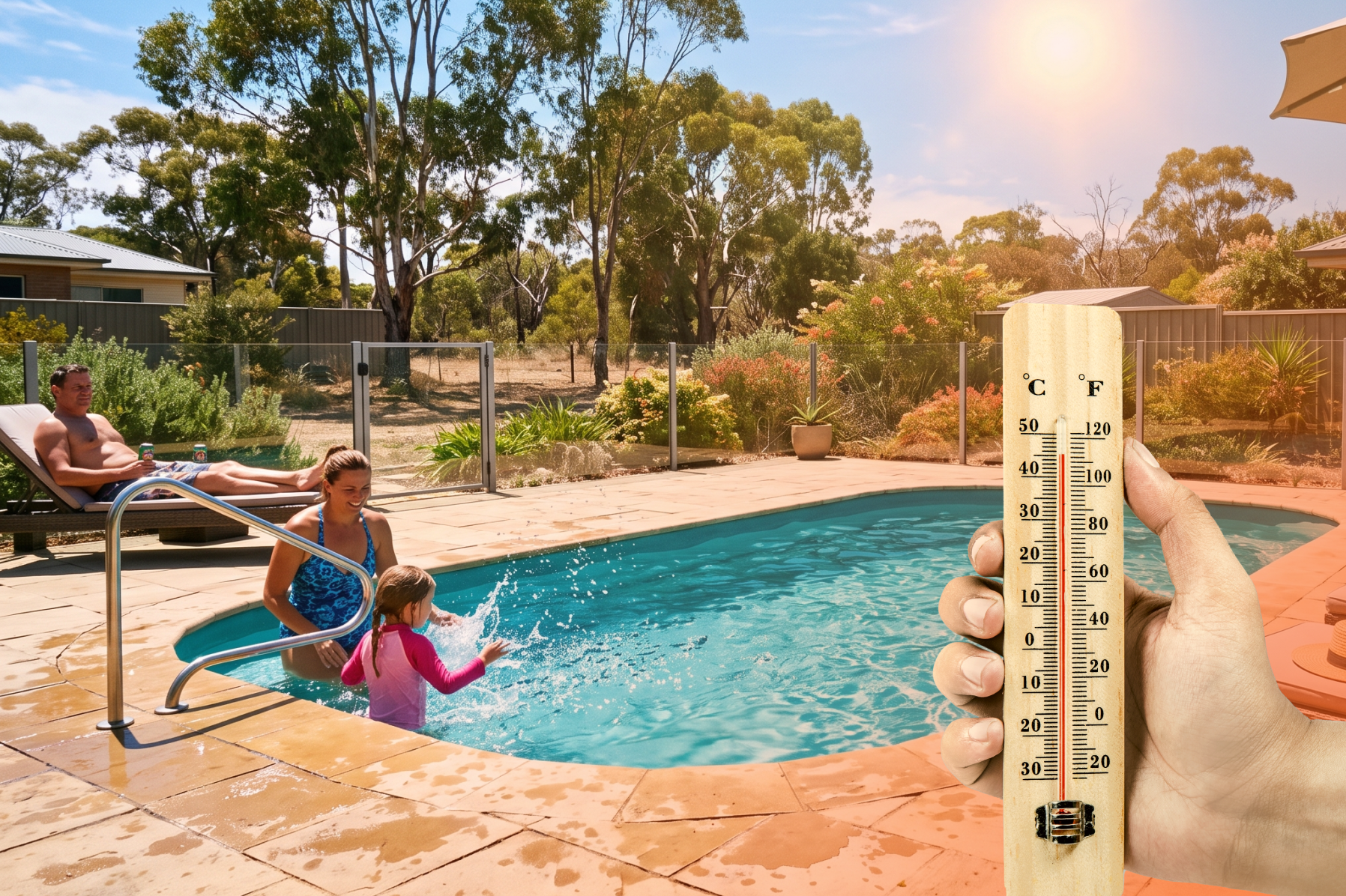
Marketing photos always show a pool in perfect light and mild weather. The honest test is what it looks like after a decade of 35°C summers, relentless UV and water that's uncomfortably warm by February. That's the test a lot of Australian pools actually face, and it's the part of the Fibreglass vs Concrete vs Vinyl Pools comparison that matters most in the hot zones.
Whether you DIY the build or use a licensed installer, the heat-proofing choices are the same, gel-coat colour, cover and equipment housing, not who does the work.
|
Quick Answer In extreme Australian heat (40°C-plus days, sustained UV, water over 32°C), quality fibreglass with a marine-grade gel coat outperforms concrete on surface longevity, structural stability and chemical demand. Concrete handles the heat structurally but its interior finish ages faster. Vinyl struggles most, UV is its main failure mode. |
What Extreme Heat Means for a Pool
By “extreme” we mean conditions that genuinely stress pool materials: air over 40°C for sustained spells (Mildura, Broken Hill, Wyndham and large parts of WA push into the mid-40s in February), water over 32°C when a pool is left covered through summer, and a UV index that regularly tops 14, among the highest anywhere in the populated world, according to the Bureau of Meteorology.
It's the sustained 8-to-10-month exposure that ages materials, not the single hottest day. For a meaningful slice of Australian pools, this is routine, not a rare outlier.
Surface Performance Under Sustained UV
UV is what wrecks the visible surface of any pool, and the surface chemistry decides how it copes.
-
Fibreglass gelcoat. Marine-grade gelcoat like AquaGuard-X™ (the finish on every CFPK supplied shell) is built for permanent UV exposure, the same chemistry used on boat hulls that live in tropical water. Expect no visible UV degradation for the first decade, maybe slight dulling on shaded edges after that (cosmetic, and polishable), and gradual chalking only if maintenance has been minimal. Most quality built fibreglass pools are still looking great after 25 years.
-
Concrete interior. Pebble, plaster, render and tile are more UV-vulnerable. Plaster is worst, sustained UV ages the binder and it chalks and shifts colour; pebble holds up better but stones can loosen; tile is the most stable but the dearest. Resurfacing is typically due every 10 to 15 years at $6,000 to $15,000 as a guide.
-
Vinyl liner. UV is the primary enemy, breaking down the vinyl and leading to brittleness, fading and shrinkage. In extreme-heat regions, liners tend to need replacing sooner than the usual cycle.
Structural Stability in Heat Cycling
Pools aren't just stressed by heat, they're stressed by the swing. Day-to-night ranges of 25°C are routine inland (a 45°C day, a 20°C night), and the shell expands and contracts with it.
-
Fibreglass. The composite lay-up absorbs thermal cycling cleanly. It's slightly flexible, so it distributes the stress rather than concentrating it. No structural concern in extreme heat.
-
Concrete. Heat cycling is one of the contributors to surface cracking. Quality concrete with proper steel and movement allowance handles it, but a cheap build can show hairline cracks in its first few inland summers.
-
Vinyl. The wall structure is unaffected by heat cycling; it's the liner that degrades, as above.
Water Chemistry in Hot Water
Hot water makes everything chemistry-related harder, chlorine burns off faster, algae grows faster, pH drifts faster.
-
Fibreglass. The non-porous gelcoat adds nothing to the chemistry load. You'll use noticeably more chlorine in warm water and run a slightly higher salt-cell output through summer, but the surface isn't working against you.
-
Concrete. Hot water amplifies concrete's existing challenges. Algae loads inland in February can be brutal, so owners use significantly more chlorine, run filtration longer and dose algaecide more often. The acid-wash cycle comes around sooner.
-
Vinyl. Hot water doesn't damage the liner directly, but the aggressive chemistry needed to fight algae in heat, combined with high temperatures, shortens liner life. Keep an eye on chlorine levels.
Evaporation and Top-Up
Heat plus low humidity means serious evaporation. An uncovered pool inland in February can lose a striking amount of water a day, easily into the hundreds of litres. It's not pool-type-specific, every pool evaporates, but the concentration effect hits harder on concrete (already higher chemical demand) and vinyl (sensitive to concentrated chemistry).
A cover is non-negotiable inland: a solar cover sharply cuts evaporation (commonly cited at around 90%) and takes a big bite out of your top-up water and chemical loss.
Equipment in Extreme Heat
The shell is one part of the system; the gear is another, and heat affects it whatever the pool's made of. Variable-speed pumps tolerate heat well, older single-speed units can overheat if poorly housed. Sand filters need backwashing more often as the biological load climbs. And heat pumps don't run for heating in a hot-zone summer, models with a cooling mode are increasingly common inland.
Ten Years in Mildura: A Reality Check
Mildura sees around 30-plus days a year above 35°C (per Bureau of Meteorology records), pushes into the high 40s in heatwaves, and runs a long swim season. After a decade in that environment:
-
Fibreglass. Surface still looks close to new, maybe minor chalking in shaded corners that can be easily removed. Structure unchanged, chemical demand steady. Plenty of life left.
-
Concrete. Pebble showing wear with the odd dropout repaired, plaster behind it chalking, a resurface due around year 12. The structural concrete is fine, but the interior is on its last legs.
-
Vinyl. First liner replaced around year 8, another due later. Wall structure holding up, but you're into the replacement rhythm.
The cost trajectory diverges sharply over 25 years, fibreglass lands lowest (basically the install cost, no major surface work), concrete highest, and vinyl in between once you count the liners. We put real dollars on it in Lifetime Cost Analysis: Which Pool Type Saves Money?, and the wider climate story is in which pool type handles Australian weather best.
Mitigations Worth Spending On
Whatever the pool type, the same handful of moves protect it in extreme heat:
-
A pool cover. The single biggest protector, a solar cover cuts evaporation sharply and limits UV on the surface.
-
A mid-range gelcoat colour (fibreglass). Avoid the very dark colours inland, they absorb more heat and push the water temperature up a few degrees, which only adds to the chemistry pressure.
-
A variable-speed pump on long low-speed cycles. Keeps the water moving to dissipate heat and avoid stagnant warm pockets.
-
Shade. Trees, a pergola or a sail that cuts direct sun for the hottest part of the day slows surface degradation noticeably.
-
Good equipment spec. Marine-grade fencing, UV-resistant housings and sealed electrical junctions, small upgrades that compound over years.

Frequently Asked Questions
Do fibreglass pools handle extreme heat better than concrete? Yes, across most measures. The marine-grade gel coat holds up under sustained UV with minimal degradation, the composite shell takes thermal cycling without surface cracking, and chemical demand stays manageable in warm water. Concrete is structurally fine but its interior finish ages faster.
Will my fibreglass pool fade in the sun? Not for 15 to 20 years on a quality gel coat with normal care. Some slight surface chalking is possible after that, cosmetic only, and an optional refresh restores it. Our 35-year structural warranty is unaffected by gel-coat appearance.
How hot can pool water get in Australian summers? Uncovered pools inland can sit in the low-to-mid 30s through February; tropical pools run around 30 to 32°C. A cover keeps them a few degrees cooler. Past about 32°C, chlorine demand and algae pressure both rise.
Is concrete or fibreglass better for hot inland climates? Fibreglass, by a clear margin. The non-porous surface keeps chemistry manageable in hot water, the composite handles the thermal cycling, and the lower upkeep matters more where pools work hardest. Choose a mid-range gel-coat colour and use a cover.
Do I need a special fibreglass pool for extreme-heat regions? No. Standard CFPK kits with marine-grade AquaGuard-X™ gel coat are built for Australian conditions, including the hot zones. The bigger calls for a hot region are the gel-coat colour, the cover and the equipment housing, not the shell itself.

