
.svg)









 Affordable Financing
 Fibreglass Pool Install Stages
The single biggest practical difference between fibreglass and concrete isn't how many days the crew shows up. It's how long your backyard is a building site. That's the real question, and it's the main reason fibreglass dominates the market in our Fibreglass vs Concrete vs Vinyl Pools comparison. Two to four weeks versus three to six months changes the whole shape of the project.
Whether you're running the build yourself with your own trades or handing it to a licensed installer, the sequence works the same way. It's who coordinates it that changes.
This article compares the onsite construction period beginning with site preparation and excavation. It doesn't include council approvals, shell manufacturing or other planning that needs to happen before work begins.
|
Quick Answer A fibreglass shell drops into the ground on a single crane day. The physical installation generally involves 7 to 14 active working days, usually spread across a three-to-four-week construction period from the first dig to a compliant fence, certification and water ready for swimming. A concrete pool commonly takes 12 to 16 weeks of stage-by-stage onsite construction. Once finishing works, trade scheduling and weather delays are included, a completed project can take three to six months. A vinyl liner pool can generally be installed in five to 14 working days, with fencing, surrounds and other finishing works potentially extending the project. That time difference flows straight into cost, weather risk and how soon you're swimming. |
The Three-Day Claim and What It Actually Means
You'll hear “fibreglass pools are installed in three days” in advertising. It's true for a specific definition, and worth being clear about so you're not caught out.
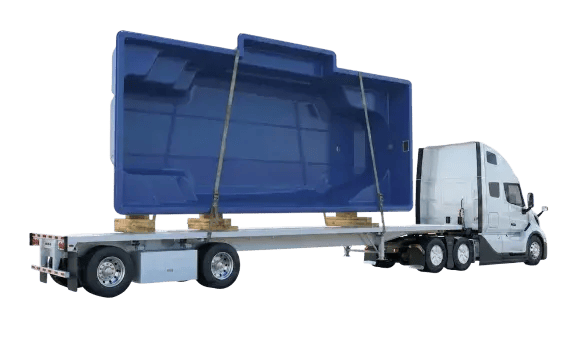
The fibreglass shell itself is normally placed in the ground on a single crane day. On a straightforward site, the intensive early installation stages of excavation, crane placement, initial plumbing and the backfilling can be completed in 3 working days.
But that's not the same as three days from delivery to finished swimming pool. A complete fibreglass project also takes in equipment plumbing, electrical, the bond beam, curing time, coping, fencing, certification and surrounding works.
Realistically, the installation involves 7 to 14 active working days spread across three to four calendar weeks. A confident DIY build with a tight trade schedule can complete the basic installation in two weeks. Concrete, for comparison, commonly takes 12 to 16 weeks to construct onsite.
Fibreglass: Week-by-Week
Here's how a typical fibreglass install actually unfolds across an Australian backyard:
- Construction Week 1, site preparation, excavation and shell placement. Excavator in, underground services located through Before You Dig Australia (BYDA), the footprint dug to spec, and the bedding layer prepared. The truck delivers the shell, the crane lifts it into the hole, and it's positioned and levelled. This is the day the neighbours wander out to watch.
- Construction Week 1, plumbing, pressure testing and backfilling. The skimmer box, return jets and suction lines are connected and the circulation plumbing is pressure-tested. Progressive backfilling and water filling can then begin, with the water level inside the pool and the backfill level outside brought up together so the shell remains supported and can't shift.
A confident owner-builder can complete the pool circulation plumbing. A licensed plumber is required for regulated plumbing work, such as connecting a filter waste line to mains sewer. Mains electrical work must be completed by a licensed electrician. - Construction Week 2, levelling and bond beam. Backfilling and progressive water filling are completed while the pool level, water level, backfill height and wall alignment are checked. A concrete bond beam is then poured around the top of the shell where required. In Western Australia, a concrete bond beam isn't required.
- Construction Week 3, coping, equipment and surrounds. Once the bond beam has cured sufficiently, coping paving is laid around the edge. The pump, filter, chlorinator and lights are installed and tested, while paving, decking and other basic surrounding works continue.
- Construction Weeks 3–4, fencing, commissioning and certification. The permanent safety fence is completed to AS 1926.1. The filtration system is commissioned, the water is balanced and the fence and pool are inspected for final certification.
Finshed day lands about three to four weeks from the first dig on a typical build.
If you're DIYing, that same sequence applies, you're just booking and coordinating the trades yourself instead of a builder doing it. You still bring in appropriately licensed trades for regulated plumbing and mains electrical work. If you're using an installer, they run the schedule and you check in at the milestones.
Either way it's a fast, contained job, and it's a big part of why most Australians now choose fibreglass over concrete.
Concrete: Stage-by-Stage
Concrete is built from scratch on your block. The structural shell that already exists in a fibreglass kit has to be constructed from steel and shotcrete, then cured and finished. The stages:
-
Week 1–2, excavation. Dig the hole, including the deeper structural recess concrete needs, plus formwork space and plumbing trenches. Noticeably more excavation than fibreglass for the same finished pool.
-
Week 2–3, steel reinforcement. The steel cage is tied to the design, with the plumbing rough-in installed at the same time.
-
Week 3–4, shotcrete. Concrete sprayed at high pressure, the usual method on residential builds. Then it has to cure: initial set in about 24 hours, workable strength in 7 to 14 days, full structural strength at 28 days.
-
Week 5–7, interior finish. Plaster, pebble or hand-laid tile applied to the cured shell. Slow, hands-on, weather-dependent work.
-
Week 8–10, coping, fencing and equipment. The same trades as fibreglass, just sequenced after a much longer shell stage.
-
Week 11–16, surrounds, certification and water-in. Final landscaping, fence certification and commissioning, then cleanup and handover.
A standard onsite build lands at 12 to 16 weeks. A completed project can take three to six months once finishing works, trade availability and weather delays are included. A highly coordinated build may be completed more quickly, but that assumes favourable weather, available trades and no surprises.
Why Concrete Takes Months, Not Weeks
Cure time can't be rushed. Concrete sets in about 24 hours, reaches workable strength in 7 to 14 days, and fully cures at 28 days. You can't finish a pool that hasn't cured, and no amount of trade availability compresses that.
Trade sequencing is linear. Excavator, steel fixers, shotcrete crew, tilers, coping, fencing, each waits on the one before. Fibreglass allows several installation activities to be completed within a much shorter construction period.
The interior finish is slow work. Hand-trowelled plaster or hand-laid tile is a week-long job on a typical pool. Fibreglass arrives from the factory completely finished.
That's where the price gap comes from too. You're not paying more for a better pool, you're paying for a longer, more complex, more weather-exposed build. The full cost picture is in our Complete Fibreglass Pool Cost Guide and the 20-year view in Lifetime Cost Analysis.
Vinyl, for Comparison
Vinyl falls between fibreglass and concrete in terms of how it is constructed. The structure is steel or polymer wall panels with a concrete or vermiculite floor, then the liner goes in last.
The process involves excavation and base preparation, installing and bracing the wall panels, pouring and curing the floor, fitting the liner, then completing the plumbing, backfill, coping, fencing and water filling.
Basic assembly and installation can be completed in as little as five days, weather permitting, although allowing up to two weeks is a more realistic estimate. Fencing, surrounds and other finishing works can extend the overall construction period. A custom liner can also add supply time before installation begins.
Weather and Trade Coordination
Build length drives your weather risk. A three-to-four-week fibreglass build has a much better chance of fitting between rain windows; a 12-to-16-week concrete build has to wear whatever the season throws at it.
-
Fibreglass. Excavation, concrete pours, saturated backfill and high winds on crane day can all pause work. Some plumbing, equipment preparation, drainage planning and general site work can continue in light rain if conditions remain safe. Allowing an additional five to 10 days as a weather contingency is sensible, although some projects won't need it.
-
Concrete. More stages are weather-affected. Concrete pours, curing, interior finishes, tiling and surrounding works all require suitable conditions, and a bad week mid-cycle pushes everything behind it back. Expect the delays to stack up over a long build.
There's a coordination cost too. A concrete build needs a lot more separate trade visits than fibreglass, sequenced over months instead of weeks. In a tight trades market, the longer stack quotes slower and runs longer.
What the Time Difference Costs You
-
Labour. A 12-to-16-week build under ongoing site management costs more than a three-to-four-week one, even at the same hourly rates. The labour line in a concrete quote is meaningfully higher.
-
Backyard downtime. Every week of build is a week of half the yard fenced off, the dog shut out and gear underfoot. For families with young kids, that's a real cost.
-
Swim season. Start a concrete build in September and Christmas in the water is touch and go. Start a fibreglass build in October and you've still got room. Miss the window and the pool sits unused through summer waiting on the next one.
Plenty of buyers start out thinking build time doesn't matter to them, and finish the conversation realising it does. By the third “we'll be back next Tuesday, weather permitting”, the case for fibreglass tends to make itself.

Frequently Asked Questions
How long does a fibreglass pool installation actually take? A typical fibreglass installation involves 7 to 14 active working days, usually spread across three to four calendar weeks from first excavation to a certified fence and water ready for swimming. The shell itself goes in on a single crane day. A confident DIY build with tightly coordinated trades may complete the basic installation in two weeks. Concrete, for comparison, commonly takes 12 to 16 weeks to construct onsite.
Why does concrete take so much longer than fibreglass? Cure time, linear trade sequencing, and slow hand-finished interiors. Each stage of a concrete build has cure or dry windows that can't be compressed, and the shell has to be built from scratch on site rather than arriving finished from a factory.
Can a fibreglass pool really be installed in three days? The shell can normally be placed in the ground on a single crane day, and the intensive early installation stage may be completed in three to five days on a straightforward site. The complete installation generally involves 7 to 14 active working days spread across three to four calendar weeks. The “three days” line doesn't mean three days from delivery to swimming.
Will weather delay my pool installation? It can, for both types, but more so for concrete. Excavation, saturated backfill, concrete pours and high winds on crane day can delay a fibreglass installation. Some other work can continue in light rain if conditions are safe. Allowing an additional five to 10 days for weather is sensible. A concrete build is weather-exposed across more stages and for a much longer period, so delays are more likely to stack up.
Does a faster install mean a worse pool? No. Fibreglass is faster because the structural work already happened in a controlled factory, not because corners are cut on site. A quality shell with marine-grade gel coat carries a long structural warranty, 35 years on CFPK kits.


