
.svg)










 Affordable Financing
 Fibreglass Pool Install Stages
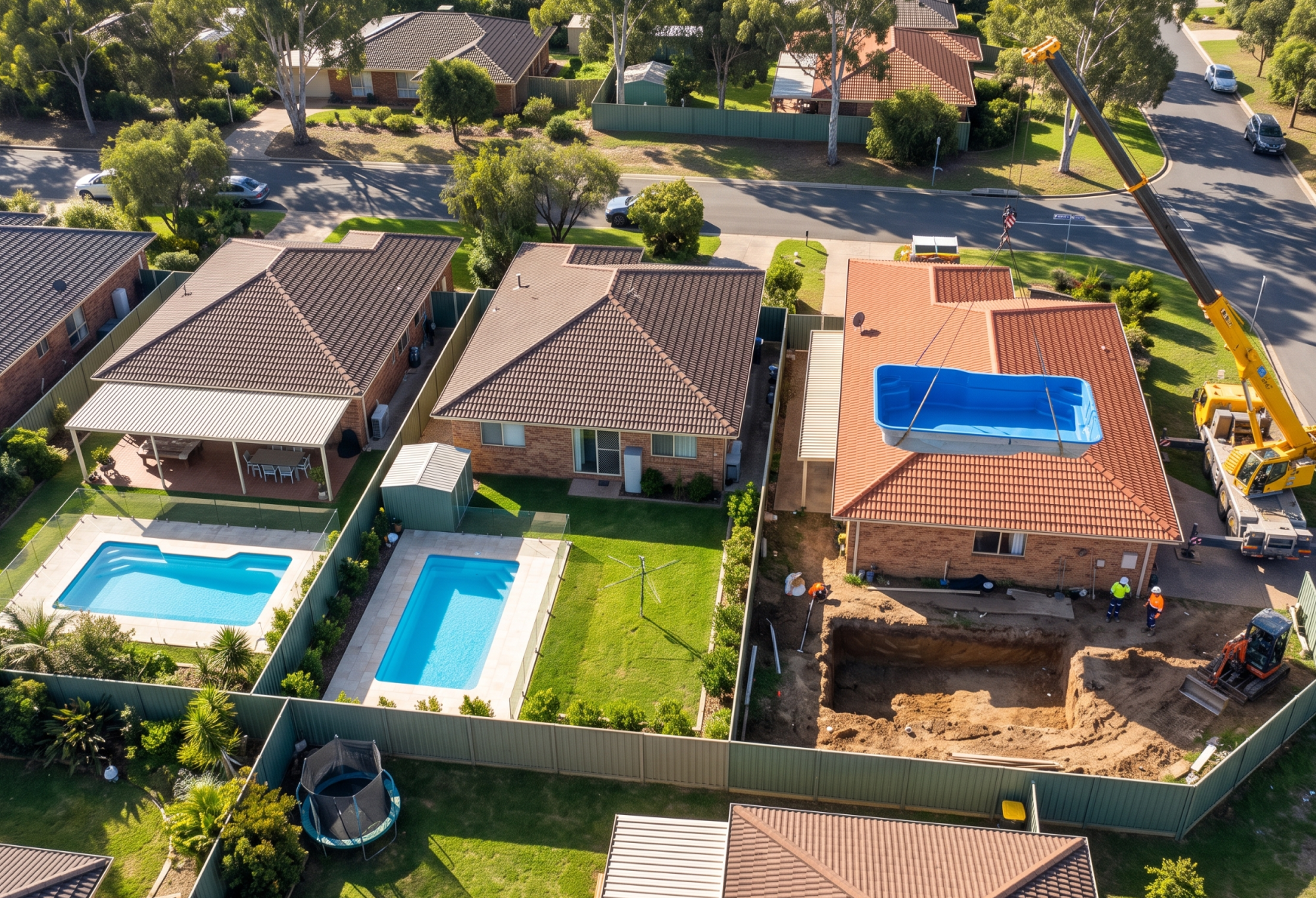
Walk through any new suburban area built in the last decade and look at the backyards. Most of the pools are fibreglass. There's a reason for that, five of them actually, and it isn't that the salespeople are louder. This is the detail behind the headline in our Fibreglass vs Concrete vs Vinyl Pools comparison: why fibreglass has become the default for new in-ground pools in Australia.
Whether you're installing it yourself with your own trades or handing it to a licensed builder, the same five reasons apply.
|
Quick Answer More than half of the new in-ground pools sold in Australia are now fibreglass. Buyers pick it over concrete because it's faster (2-3 weeks, against the 8 to 16 weeks a concrete build takes), usually around 20–40% cheaper upfront, easier to maintain, longer-lived without resurfacing, and the only realistic DIY option. |
Where the Market Actually Sits
You'll see all sorts of percentages thrown around in pool advertising, so it's worth being straight about it. Fibreglass is now the majority of new in-ground residential pools going into Australian backyards. Concrete is the next biggest share, and vinyl is a small slice, mostly cooler-climate suburbs and the budget end. The exact split shifts year to year and state to state, but the direction hasn't changed in a decade: fibreglass keeps gaining ground.
So when you hear that most Australians choose fibreglass over concrete, that's the honest version of it. Concrete still has a healthy share. It's just the smaller one now, and the gap keeps widening. The five reasons below explain WHY.
Reason One: Build Speed
The single biggest reason fibreglass wins is TIME. The shell turns up as a finished product, because the structural work already happened in the factory. On site, the job is excavation, plumbing, crane day, backfill, coping, fencing and surrounds.
A typical fibreglass build runs about 10 to 20 working days, from first dig to a compliant permanent fence. Three weeks is common. A confident DIY build with a tight trade schedule can get there in two.
A concrete build runs 8 to 16 weeks. Eight is quick. Plenty land at 12 to 16, and a big, heavily landscaped concrete pool can stretch past that.
That gap matters more than people expect. Every extra week is another week of mud in the driveway, half the yard fenced off, vans on the kerb, and someone asking when they can swim. If you're trying to be in the water by Christmas, fibreglass gives you room to move. Concrete cuts it fine.
Check out our full stage-by-stage in Installation Time Comparison: 3 Days vs 3 Months.
Reason Two: Upfront Cost
For a mid-size family pool (around 7m, basic surrounds), here's the rough 2026 picture:
-
Fibreglass, fully installed: $45,000 to $60,000
-
Concrete, fully installed: $75,000 and up
That's roughly a 20–40% premium on concrete, and two things drive it. First, concrete is materials-and labour-heavy: steel, shotcrete, an interior finish, grout, each one its own trade and day rate.
Fibreglass gets all of that done in the factory. Second, a 12-week build with daily site management, traffic control and multiple inspections simply costs more than a two-week one, whatever the pool style.
If you're going DIY, the gap widens again, because you're not paying a builder's project-management margin, just the kit plus your own trade quotes for excavation, plumbing, crane and fencing. If you'd rather a builder run it, you pay for that convenience but skip the coordination. Concrete, by contrast, isn't really a DIY project.
Owner-built concrete pools are rare, and most councils and insurers aren't keen on them. The full cost picture is in our Complete Fibreglass Pool Cost Guide.
Reason Three: Lower Long-Term Maintenance
Fibreglass has a gelcoat surface, and it's non-porous, so algae has nothing to grab. A concrete interior, even pebble or tile, is microscopically rough and slightly porous, which gives algae a foothold. Day to day, that plays out as:
-
Chemicals: fibreglass uses roughly 20–30% less chlorine and algaecide over a year.
-
Brushing: fibreglass owners brush fortnightly, or let the robot do it. Concrete owners brush weekly, more in the warm months.
-
pH: concrete is alkaline and slowly pushes your pH up, so you're adding acid regularly. Fibreglass doesn't drift like that.
-
Acid washes: standard on concrete every few years to strip biofilm and stains. Not a thing on fibreglass.
As a guide, annual running costs land at about $500 to $800 for a fibreglass pool, against $1,200 to $2,000 for concrete. Over 20 years that's a $15,000 to $30,000 difference, before you even count concrete's resurfacing.
We run the full 20-year numbers in Lifetime Cost Analysis: Which Pool Type Saves Money?, and go task by task in Maintenance Comparison: Which Pool is Easiest to Clean?.
Reason Four: Longer Surface Life Without Resurfacing
Concrete's structural shell can last 40 years or more. But the interior finish, the bit you actually swim against and look at, doesn't. Pebble, plaster, render and tile finishes need redoing every 10 to 15 years, and resurfacing a mid-size concrete pool costs $6,000 to $15,000 as a guide.
That bill is easy to forget at purchase, but it's a real consequence of owning a concrete pool. Buy a 12-year-old one and you're likely up for a resurface within a few years. Build new and it lands somewhere between years 10 and 15.
Fibreglass gelcoat, like the AquaGuard-X™ on every shell sold by Complete Fibreglass Pool Kits, generally lasts the structural life of the shell, realistically 35 years or more. If it dulls or chalks down the track you can freshen it up, but that's a cosmetic job, not a teardown. And our manufacturer backs the shell with a 35-year structural warranty, against a concrete structural warranty that's typically only 6 to 8 years.
Reason Five: The Only Realistic DIY Option
This is the one that surprises people. Of the three pool types, fibreglass is the only one a competent owner-builder can genuinely install. The shell arrives finished, so the on-site job is excavation, setting it dead level, plumbing, backfill, and the regulated trades. CFPK supplies the kit and the documentation. You bring in a licensed plumber (if discharging filters into mains sewer) and electrician for the parts that legally need them, and self-manage the rest.
Concrete isn't a DIY proposition. Steel-fixing, shotcrete and finishing are specialist trades, and the whole build needs licensed builders start to finish. So if DIY appeals, fibreglass is effectively your only way in. And if it doesn't, Complete Fibreglass Pool Kits has an optional installer referral network you can lean on.
Where Concrete Still Makes Sense
None of this makes concrete a bad pool. If you want a genuinely custom shape, a depth past 2.2m, a pool longer than the fibreglass range goes, or a true knife-edge infinity, concrete is still the answer, and it's worth paying for when the design actually needs it.
For a standard family pool, though, you're mostly paying for a longer, messier build rather than a better swim. The full side-by-side is in our Fibreglass vs Concrete vs Vinyl Pools comparison.

Frequently Asked Questions
What percentage of Australian pools are fibreglass? There's no single official figure, but fibreglass is now the majority of new in-ground residential pools in Australia, comfortably more than half, and the share has climbed steadily for a decade. Concrete is the next biggest, and vinyl a small slice.
Are fibreglass pools as good quality as concrete? For typical residential use, yes. A quality fibreglass shell with a marine-grade gel coat lasts 35-plus years without needing resurfacing. Concrete's shell can last longer structurally, but its interior finish needs replacing every 10 to 15 years.
Is a fibreglass pool a good investment compared to concrete? Almost always. Fibreglass costs around 20–40% less upfront, runs cheaper year to year (about $500 to $800 against $1,200 to $2,000 for concrete), and skips the 10-to-15-year concrete resurfacing cycle ($6,000 to $15,000 each time).
Can I install a fibreglass pool myself? Yes. Plenty of CFPK kit buyers self-install, using licensed plumbers and electricians for the regulated work. Concrete is essentially not a DIY option for homeowners.
Why do some salespeople still push concrete? Margin and design flexibility. Concrete carries higher build margins for the contractor, and for buyers who genuinely need a custom shape, it's the right call. For a standard family pool, it usually isn't.


