
.svg)









 Affordable Financing
 Fibreglass Pool Install Stages
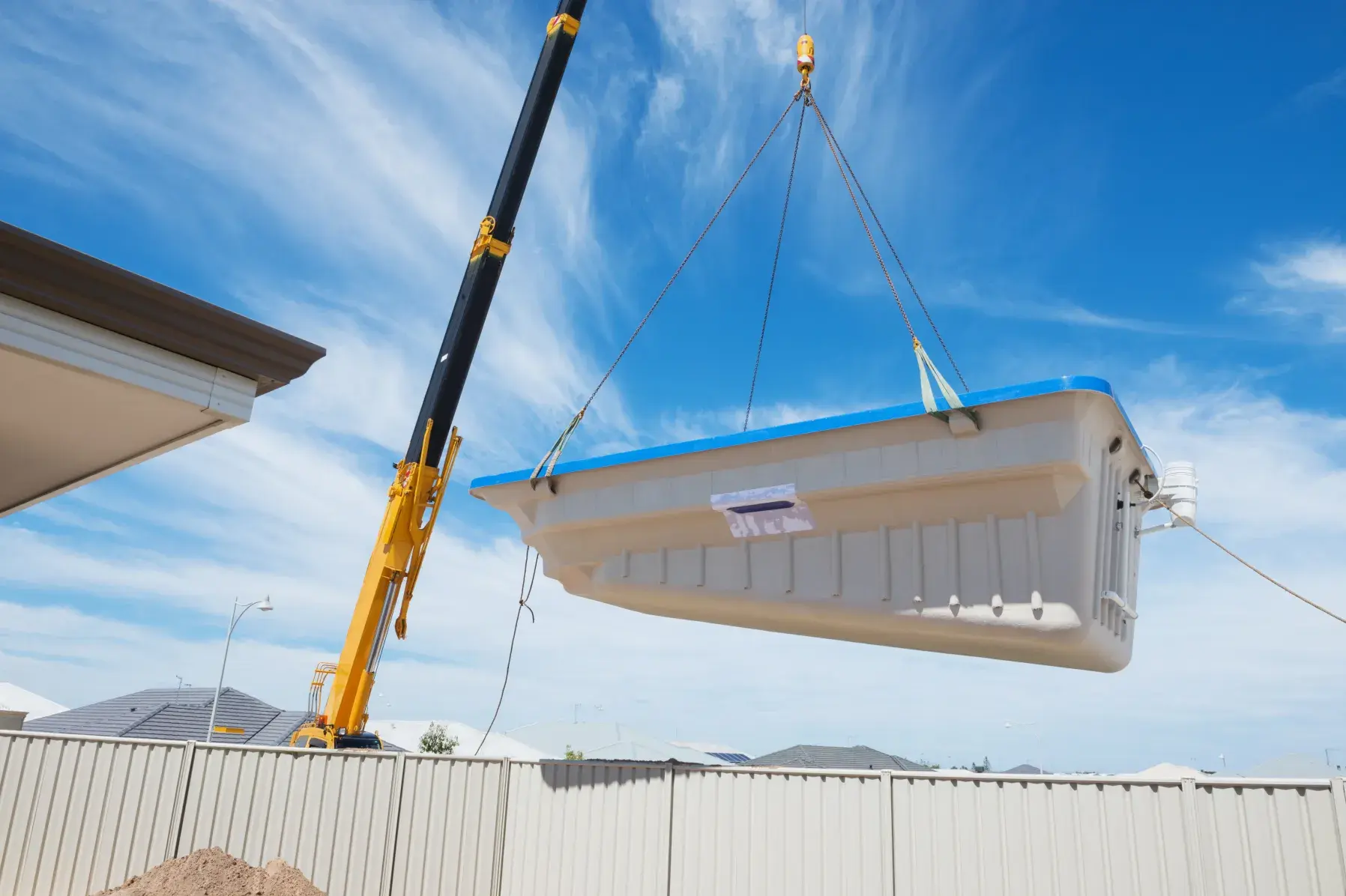
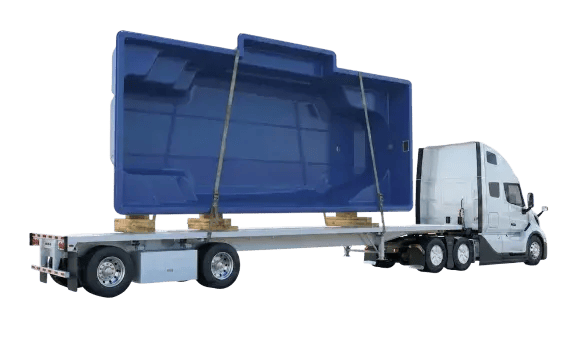
A truck arrives with your fibreglass pool shell. The crane sets up out the front. The crew checks the lift path, the shell is connected to the lifting gear, and then your pool is carefully lifted into place.
It is the part of the fibreglass pool installation process most homeowners picture first, especially if the shell needs to go over the house. It looks dramatic from the street, but a well-planned crane day should feel controlled, organised and uneventful.
The lift itself is usually quick. The real work happens before the boom goes up: checking access, confirming crane size, preparing the excavation, managing power lines, keeping the road clear and making sure the delivery timing works.
In this guide, we’ll walk through what happens when your fibreglass pool shell is delivered, lifted and placed into the excavation, including crane sizes, planning costs, access issues and the problems that can delay installation day.
|
Quick Answer: What happens during fibreglass pool crane installation? During fibreglass pool crane installation, the pool shell is delivered to site, connected to lifting gear, lifted by crane and lowered into the prepared excavation. The lift itself can be quick, but setup, safety checks, truck positioning and pack-down usually take several hours. |
Before Crane Day: The Prep That Makes the Lift Safe
Crane day should not be the day you discover an access problem. Before the truck arrives, the crane company should already know where the crane will set up, how far the shell needs to be lifted, what the shell weighs and whether anything could block the lift path.
For homeowners, the aim is simple: remove surprises before the pool shell arrives.
Check the access path
The first question is how the shell will get from the delivery truck to the excavation.
On some sites, the pool is lifted over the house or garage with a mobile crane. On others, there may be enough side access for suitable equipment, such as a franna crane, to move the shell down the side of the home.
That depends on more than width. The crane company will also look at turning room, ground conditions, overhead clearance, fences, trees, eaves, carports, slope and where the shell can safely be controlled during the lift.
Do not assume a smaller crane will work just because the pool shell is not extremely heavy. Shell weight matters, but reach often matters more. The further the crane has to lift, the larger the crane may need to be.
Check power lines early
Power lines can stop a fibreglass pool installation if they are left until the last minute.
If overhead lines are near the crane, truck or lift path, contact the relevant network operator early.
Ausgrid in NSW
Western Power in WA
SA Power Networks in SA
The safe approach distance and required controls depend on the state, network, voltage and site layout. Do not rely on a rough distance from a neighbour, forum or previous job. Power line requirements are site-specific.
Confirm the crane setup area
The crane needs firm, suitable ground. A cracked driveway, weak crossover, soft verge or narrow street can change the setup plan.
Before crane day, confirm whether the crane will set up on the road, driveway, crossover, inside the property or from a neighbouring property if that has been arranged.
If the crane sets up on the street, check whether council approval, traffic control or a road occupancy permit is needed. Some simple lifts only need basic coordination, while road setups may need formal approval.
Make sure the excavation is ready
The excavation should be checked before the shell arrives, not while the crane is waiting on hourly hire.
Confirm the hole, base, pool orientation, access around the excavation and set-down area are ready. Also check whether rain has softened the base, filled the hole or made access unsafe.
If the excavation is not ready, the shell will not be able to be lifted into place.
Keep the work area clear
One parked car can delay the lift.
Let neighbours know when the crane is booked, especially if the truck or crane needs the street clear. Move cars, trailers, bins, spoil piles and building materials out of the setup area before installation morning.
Also make sure someone is on site to meet the truck, speak with the crane crew and confirm the pool orientation before the lift starts.
Homeowner checklist before crane day
Before installation day, confirm:
-
the crane company has the shell weight, dimensions and lift point details
-
the delivery date and expected arrival window
-
where the delivery truck will park
-
where the crane will set up
-
whether power lines, trees, eaves, carports or fences affect the lift
-
whether council approval or traffic control is needed
-
the driveway, crossover, road or setup area has been checked
-
the excavation, base and pool orientation are ready
-
neighbours know if the street needs to stay clear
-
someone will be on site when the truck and crane arrive
Good prep makes crane day feel simple. When access is clear, the hole is ready and the crane crew has the right information, placing the shell is usually the quickest part of the day.

How the crane company decides the lift method
The crane company will usually decide between an over-house lift, side-access move or different setup after checking the shell size, lift distance, setup location and site access.
This is why early access planning matters. Two homes can have the same pool shell but need completely different crane setups because the reach, roof height, ground conditions or lift path are different.
Once the lift method is confirmed, the next step is coordinating how the shell arrives on site and where the delivery truck needs to park.
The Truck Arrival
Your shell arrives on a flatbed in South Australia and Western Australia or a drop-deck (low-loader) in Queensland, Victoria and New South Wales. The shell sits on a custom steel cradle or timber crib with foam or carpet bunks protecting the exterior flowcoat, ratchet-strapped down for transport. Where the truck parks and where the crane sets up both come back to the pool installation access requirements walked through weeks earlier - swing path, overhead clearances and the line from the road to the hole.
A typical schedule could look like this:
-
6:30am: Truck departs the yard with the shell
-
8:00am: Truck arrives at the site, parks on the most direct line to the lift
-
8:30am: Driver and dogger walk the lift path, agree on the boom angle and the set-down point
-
9:00am: Crane crew arrives and begins setup (counterweights, outriggers, bog mats)
If it is possible to have your pool delivered in the days or weeks before crane day and unloaded on your property, it takes out the need for the day to run like a Swiss watch. If the truck delivering your pool is held up in traffic, it’s not nice to see the crane and operator sitting around twiddling their thumbs while tallying up the hourly rate charge you will have to pay. In Queensland, New South Wales, and Victoria, Complete Fibreglass Pool Kits arrange delivery trucks with small crane arms that are big enough to lift the pool onto your yard but not into your hole. In Western Australia and South Australia, your pool will arrive on a flat-bed truck that needs to have a crane onsite to unload the shell. To save the double crane hire, it’s better in this instance to deliver the pool on the day of installation rather than the day before.
The Lift: 60 to 90 Minutes That Look Like Five
The actual lift is shockingly quick. The dogger gives the up command, the boom rises, the shell clears the truck, the boom rotates, the shell tracks across the property, and it descends into the hole. Total time in the air is usually 8-15 minutes.
What makes the lift safe is the absence of variables. The shell is on the slings, the slings are on the hook, the crane is on the outriggers, the outriggers are on plates, the plates are on the driveway or the road. Nothing moves that wasn't expected to move.
A homeowner watching from the deck sees:
-
Shell lifted clear (1 minute)
-
Shell rotated to face the hole (2 minutes)
-
Shell tracked across the airspace (3 minutes)
-
Shell lowered to within 200mm of base (3 minutes)
-
Shell positioned, levelled and released (5–10 minutes)
The crew on the ground guides the shell into position with tag lines, which are long ropes attached to the corners to stop it spinning in the breeze. On a windy day, the lift is sometimes postponed to the next morning. Check the BOM forecast the day before; if it's blowing a gale, don't be a hero.
Levelling and Re-Levelling After Placement
Once the pool shell has been lowered into the excavation, the crane usually keeps the slings attached while the height and position are checked.
This is when a laser level is used to confirm whether the pool is sitting at the correct height. If the shell is right, the slings can be removed, and the pool is left in place. A fibreglass pool shell can still be nudged slightly forward, backward or sideways if the final position needs fine-tuning.
If the pool is sitting too high, it will need to be lifted back out. The bedding layer then needs to be lowered, re-screeded and checked before the shell is lowered back into place.
This is where the day can get frustrating. If the bedding is still not right, the pool may need to come back out again so the base can be reworked. Sometimes this happens two or three times. In the industry, this is often called “tea bagging” because the pool keeps going up and down while everyone quietly wishes the levels had been checked properly the first time.
It is best avoided by checking your excavation depth and bedding levels carefully before the pool arrives. Every extra lift will add time and pressure, and it may also add crane hire costs if the job runs over the allowed hire period.
If the shell is sitting slightly low, usually within about 50 mm, it is usually possible to raise it during the backfilling and loading process rather than lifting it back out while the crane is still on site. This depends on the site, the shell and the installer’s assessment.
The key point is simple: do not release the shell from the crane until the height, position and base support have been checked.
What Crane Day Actually Costs
The crane is one of the trade quotes that sits on top of your CFPK fibreglass pool kit price. As a planning indicator for a typical residential lift in 2026, a standard suburban crane job lands in the $1,500–$3,000 range — that's the 25-tonne and 50-tonne mobile cranes doing the bulk of CFPK installs across Australia on a straightforward side or rear-access job.
The bigger machines push the number up:
-
25-tonne crane: $1,200–$1,800 for a quick, easy lift on a plunge pool with short reach
-
50-tonne crane: $1,800–$3,000 — the suburban workhorse for most standard family pool installs
-
80–100 tonne crane: $3,500–$6,500 — needed for longer lifts
-
130-tonne+ crane: $7,000–$12,000+ — long-boom rear access, tight inner-city blocks, or extreme reach
Most crane hires include a minimum charge (typically 3–4 hours portal-to-portal, including travel from the depot), the operator, and a dogman/rigger. Expect to pay extra for:
-
A lifting frame or spreader bar if not included ($150–$400)
-
Saturday or after-hours work (usually 1.5x the standard rate)
-
A power-line spotter where overhead lines are close to the swing path (a few hundred dollars)
-
A traffic management plan if the crane sets up on the road (typically $500–$2,000)
These figures are planning indicators only. Your crane company will quote based on reach, lift weight, access and ground conditions.
Things That Go Wrong on Crane Day (and How They're Avoided)
Most crane days are straightforward when the site has been checked properly. The problems usually come from things that should have been sorted before the truck arrived.
Here are the main issues that can delay the lift or add cost.
| Issue | What can happen | How to reduce the risk |
| Wind |
The crane operator may delay or postpone the lift if the shell cannot be controlled safely. |
Check the forecast the day before and follow the crane crew’s call on site. |
| Power lines |
The lift may not go ahead until the correct clearance or control measures are in place. |
Contact the network operator early and confirm requirements before crane day. |
| Weak driveway, crossover or verge |
The crane may not be able to set up where planned, or extra ground protection may be needed. |
Have the setup area checked and confirm whether bog mats or a different crane position are required. |
| Blocked road frontage |
A neighbour’s car, trailer or delivery truck can hold up the crane setup. |
Notify neighbours early and keep the truck and crane area clear. |
| Excavation not ready |
The shell may not be able to be placed correctly. |
Check the hole, base, depth, orientation and access before the shell arrives. |
| Missing lifting gear or spreader bar |
The lift may be delayed if the required lifting equipment is not on site. |
Confirm with the crane company what lifting gear is required for your shell. |
| Poor timing between truck and crane |
The crane may sit waiting on hourly hire if the truck is late, or the truck may wait if the crane is not ready. |
Confirm delivery timing, travel distance and crane booking details before installation day. |
A crane delay is not just annoying. It can quickly become expensive if the crew, truck or crane are sitting there waiting while someone solves a problem that should have been picked up earlier.
The goal is not to make crane day exciting. Exciting is for footy finals and auction day. Pool crane day should be boring, controlled and over before the neighbours finish their second coffee.
Who controls the crane lift on installation day?
If you are managing your own DIY fibreglass pool installation, you may be coordinating the truck, crane booking, excavation and trades. But you do not control the crane lift itself.
The crane operator, dogger and crane crew control the lift on the day. They decide whether the setup is safe, when the shell can be lifted, how it is moved and whether the lift needs to stop because of wind, power lines, ground conditions or another safety issue.
Your job as the homeowner or owner-builder is to make sure the site is ready. That means the excavation is prepared, access is clear, the shell details have been supplied, and the right people are on site to answer questions.
A good crane crew will not just “send it” because everyone is standing around waiting. If the setup is not safe, they can stop the lift. That might be frustrating, but it is much better than rushing a heavy shell over a house, fence or backyard because the schedule looked tidy on paper.
If you are using a licensed installer, they will usually coordinate the crane crew, delivery timing and site checks for you. If you are DIYing, you can still manage the day successfully, but you need to understand where your role ends and where the crane crew’s responsibility begins.
The simple rule: you manage the preparation, but the crane crew manages the lift.
How Complete Fibreglass Pool Kits can help
Complete Fibreglass Pool Kits supplies fibreglass pool shells, complete DIY pool kits, delivery across Australia and practical installation guidance for homeowners who want to manage their own pool project.
For crane day, we can help you understand the shell details your crane company may ask for, such as pool dimensions, approximate shell weight and delivery information. This makes it easier to speak with crane companies, compare quotes and plan the lift properly.
We do not manufacture pools, operate cranes or control the lift on installation day. The crane company is responsible for assessing the site, quoting the correct crane and managing the lift safely.
What we do provide is plain-English support so you know what needs to be organised before your shell arrives.
Planning a DIY fibreglass pool installation? Get in touch with Complete Fibreglass Pool Kits for shell options, kit inclusions, delivery guidance and practical advice before crane day.
Crane day should be planned, not dramatic
Craning a fibreglass pool into place looks impressive, but the lift itself is usually the quickest part of the day.
The real work happens before the shell arrives: checking access, confirming the crane setup, preparing the excavation, managing power lines, keeping the road clear and making sure the truck and crane timing line up.
If the pool is landed at the right height, the slings can come off and the next stage of installation can begin. If the bedding is too high, the shell will need to come back out and the bedding be reworked. That is why careful prep matters.

Frequently Asked Questions
Does rain stop a fibreglass pool crane lift? Light rain does not always stop a crane lift, but wind, lightning, unsafe ground or a flooded excavation can. The crane operator makes the final call on whether the lift can proceed safely. If heavy rain has affected the hole, base or access, those issues need to be sorted before the shell is placed.
Can my fibreglass pool be delivered before crane day? Sometimes, yes. In some states, CFPK can arrange delivery trucks with small crane arms that can unload the shell onto your property before crane day. In Western Australia and South Australia, where flatbed delivery may need a crane just to unload, same-day delivery and installation often makes more sense to avoid double crane hire.
Who books the crane for a DIY fibreglass pool installation? If you are managing the project yourself, you usually book the crane and coordinate delivery, excavation readiness and site access. Complete Fibreglass Pool Kits can help with shell details, delivery guidance and installation advice, but the crane company must quote the job and control the lift on the day.
What information does the crane company need before quoting? A crane company will usually ask for the pool shell dimensions, approximate weight, delivery location, lift distance, setup area, access photos and any nearby hazards such as power lines, trees, slopes or narrow streets. A site visit may be needed for harder lifts or tight access.


