










 Affordable Financing
 Fibreglass Pool Install Stages
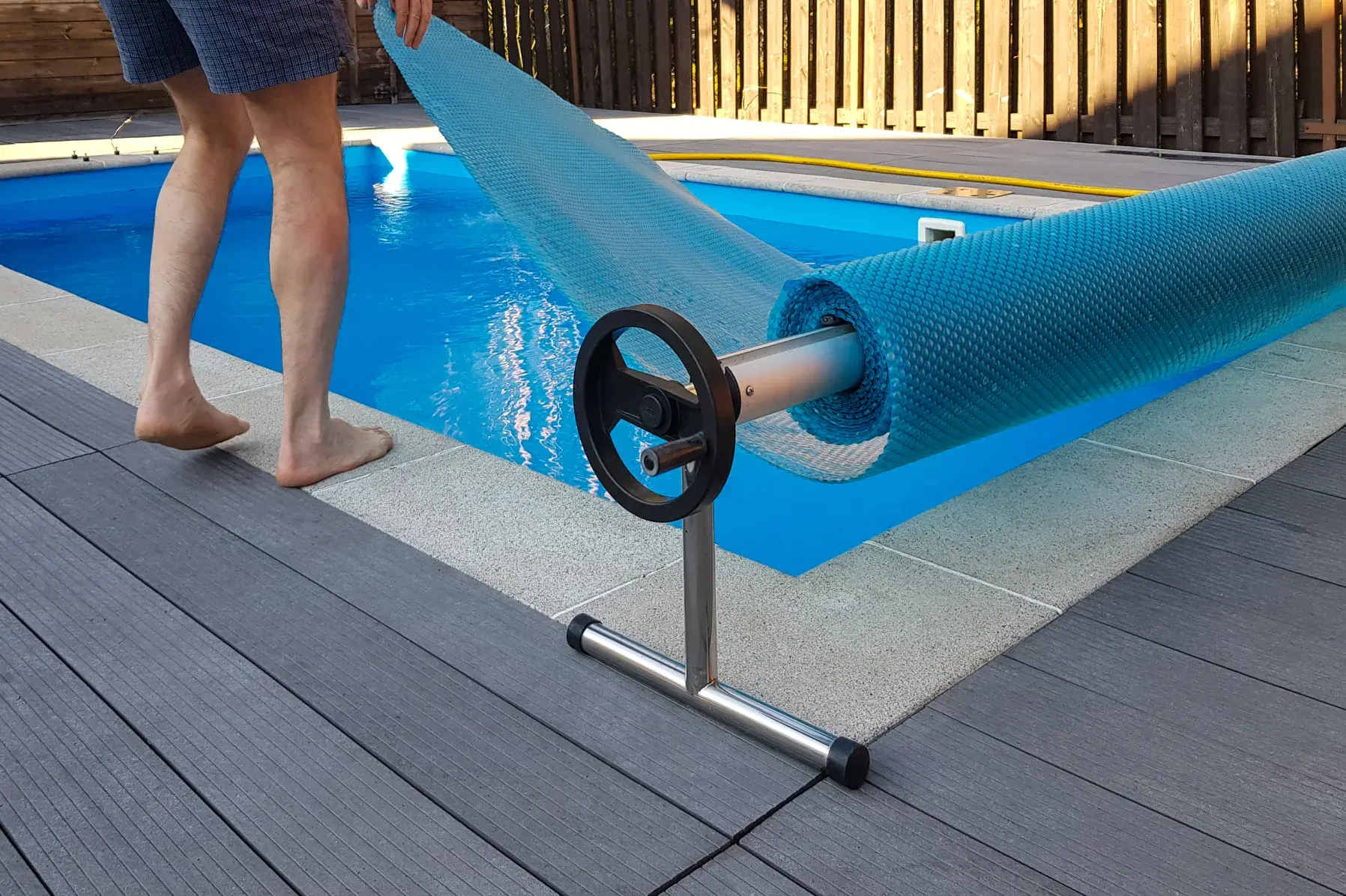
Once the water gets cold and the kids lose interest in swimming, your pool becomes a rather expensive backyard water feature until spring arrives.
Nobody wants to keep paying summer electricity bills or spending weekends maintaining a pool they aren't using. But equally, you don't want to look out the window in September and discover you've been running an algae farm for the past three months.
So, should you cover your pool for winter, leave it uncovered or turn everything off until swimming season returns?
It's a common seasonal question, and one we cover as part of our year-round fibreglass pool maintenance guide.
|
Quick Answer Do You Need a Pool Cover in Winter? No, you don't need to cover your fibreglass pool during winter. If your pool doesn't collect many leaves or dirt and evaporation isn't a problem, there's little financial benefit in covering it. Regardless of whether you use a cover, reducing your pump runtime from the usual eight hours in summer to four hours daily, turning down your chlorinator and testing your water fortnightly will substantially reduce your winter running costs. A pool cover becomes worthwhile if you have heavy leaf drop, windblown dirt or high evaporation. Otherwise, why hide that beautiful sparkling pool water under a blanket for three or four months? |
When Is Covering Your Pool Worthwhile?
There are two main reasons we'd recommend covering an unused pool during winter.
1. You have lots of leaves and dirt entering your pool.
If your pool is surrounded by gum trees, deciduous trees or exposed to windblown dust, a cover can significantly reduce the amount of cleaning needed.
Leaves aren't just a nuisance either. If left sitting on the pool floor, they can break down and release tannins that stain your gelcoat. Our guide on how to remove organic and metal pool stains explains why this happens.
2. Your pool loses a lot of water through evaporation.
Evaporation isn't just about temperature. Wind and low humidity also play a big part. Even during cooler weather, a pool in an exposed, windy location can lose a surprising amount of water.
A well-fitted pool blanket can dramatically reduce evaporation, saving water and the chemicals needed when topping up your pool.
But what if your pool is sheltered, stays reasonably clean and doesn't lose much water?
Leave it uncovered if you prefer. There's no great financial advantage in hiding a beautiful swimming pool, particularly if it's a feature of your outdoor entertaining area or visible from your living room.
Why Does Your Pool Cost Less to Maintain in Winter?
The biggest reason is the lower water temperature.
Bacteria and algae grow much more slowly in cold water. Add the fact that nobody is swimming, introducing sunscreen, sweat and other nasties, and your chlorinator has considerably less work to do.
You still need to maintain the correct chlorine level, but you'll generally need to produce much less chlorine to achieve it.
A pool blanket provides an additional benefit by reducing chlorine loss caused by the sun's ultraviolet (UV) rays.
Normally, we use a chemical called stabiliser (cyanuric acid), which acts like sunscreen for your chlorine. A blanket shields the water from UV light, reducing chlorine consumption and potentially avoiding the need for additional stabiliser during winter.
However, stabiliser isn't normally used up like chlorine. So while a blanket can save some money on chemicals, the winter savings on stabiliser alone are unlikely to justify covering your pool.
The biggest financial savings come from reducing pump operating hours and chlorine production, whether the pool is covered or uncovered.
For more on managing your pool chemicals, read Maintaining Pool Water Quality: The 5 Things You Must Know.
How We Manage Our Own Pool During Winter
Here at Complete Fibreglass Pool Kits, my own pool is in Brisbane. Despite our relatively mild winters, nobody in the family is volunteering for a July swim!
We reduce the pump runtime to four hours a day and put the pool blanket on. Not because we need to save a few dollars on chemicals, but because we have a lot of leaf drop.
The trees clearly haven't received the memo that our pool is closed for winter.
The blanket saves us a fair bit of cleaning, although some leaves inevitably find their way underneath. Every few weeks, we pull it back and clean the pool floor before the leaves have a chance to break down and cause staining.
It's a good example of where a cover makes sense. If we didn't have the leaf problem, we'd probably leave the blanket rolled up and enjoy looking at the pool instead.
The Important Precautions When Using a Pool Cover
If you decide to cover your pool for winter, there are two things you shouldn't overlook.
First, let your pool breathe. Chlorine-containing gases can become trapped beneath a floating blanket and potentially cause bleaching around the waterline or damage the blanket.
At least once a week, peel back 20% or more of your blanket and leave it open for a few hours to allow trapped gases to escape. Follow your blanket manufacturer's instructions if they require more frequent or complete removal.
Never leave a blanket on during shock chlorination. Wait until chlorine levels have returned to the recommended range before replacing it.
Second, don't forget what's happening underneath. Inspect the pool floor regularly and pull the blanket back sufficiently every few weeks to clean it, or sooner if you notice leaves or debris accumulating.
A pool blanket reduces maintenance. It doesn't eliminate it.
Your Low-Maintenance Winter Pool Routine
Whether your pool is covered or uncovered, the maintenance routine is much the same.
-
Run your pump for four hours daily. Two hours in the morning and two in the afternoon is a good starting point. Depending on your pool size, pump flow rate and chlorinator, you may need to adjust this. Our guide to single, two and variable-speed pumps explains how pump selection affects running costs.
-
Reduce your chlorinator output. Cold water and fewer swimmers mean lower chlorine demand. Adjust the output based on your water testing rather than guessing.
-
Test your water fortnightly. Test weekly while adjusting your winter settings, then fortnightly once stable. Maintain your pH between 7.2 and 7.6 and chlorine within the recommended range. Check your water chemistry again after heavy rainfall.
-
Keep your pool clean. Remove leaves, empty skimmer and pump baskets, and check your equipment is operating correctly. A quick inspection now is better than discovering in spring that your pump stopped working six weeks ago.
And one final warning: never drain your fibreglass pool for winter. Heavy rainfall can raise groundwater levels, potentially causing an empty shell to move or lift. Learn more about why fibreglass pools can pop out of the ground.
For a more detailed checklist, read our guide on how to prepare your pool for an Australian winter.

So, Cover Your Pool or Leave It Uncovered?
If leaves, dirt or evaporation are causing problems, a pool cover can save you considerable cleaning time and some money on water and chemicals.
But if your pool stays relatively clean and you enjoy looking out at that beautiful sparkling water, there's little reason to cover it just because winter has arrived.
Either way, reduce your pump and chlorinator settings, keep an eye on your water chemistry and give your pool a little attention throughout winter.
Then, when the kids suddenly rediscover the pool in spring, you'll be ready for them. No algae farm to clean up. No chemical rescue mission. Just a sparkling pool waiting for its first bombie of the season.


