










 Affordable Financing
 Fibreglass Pool Install Stages
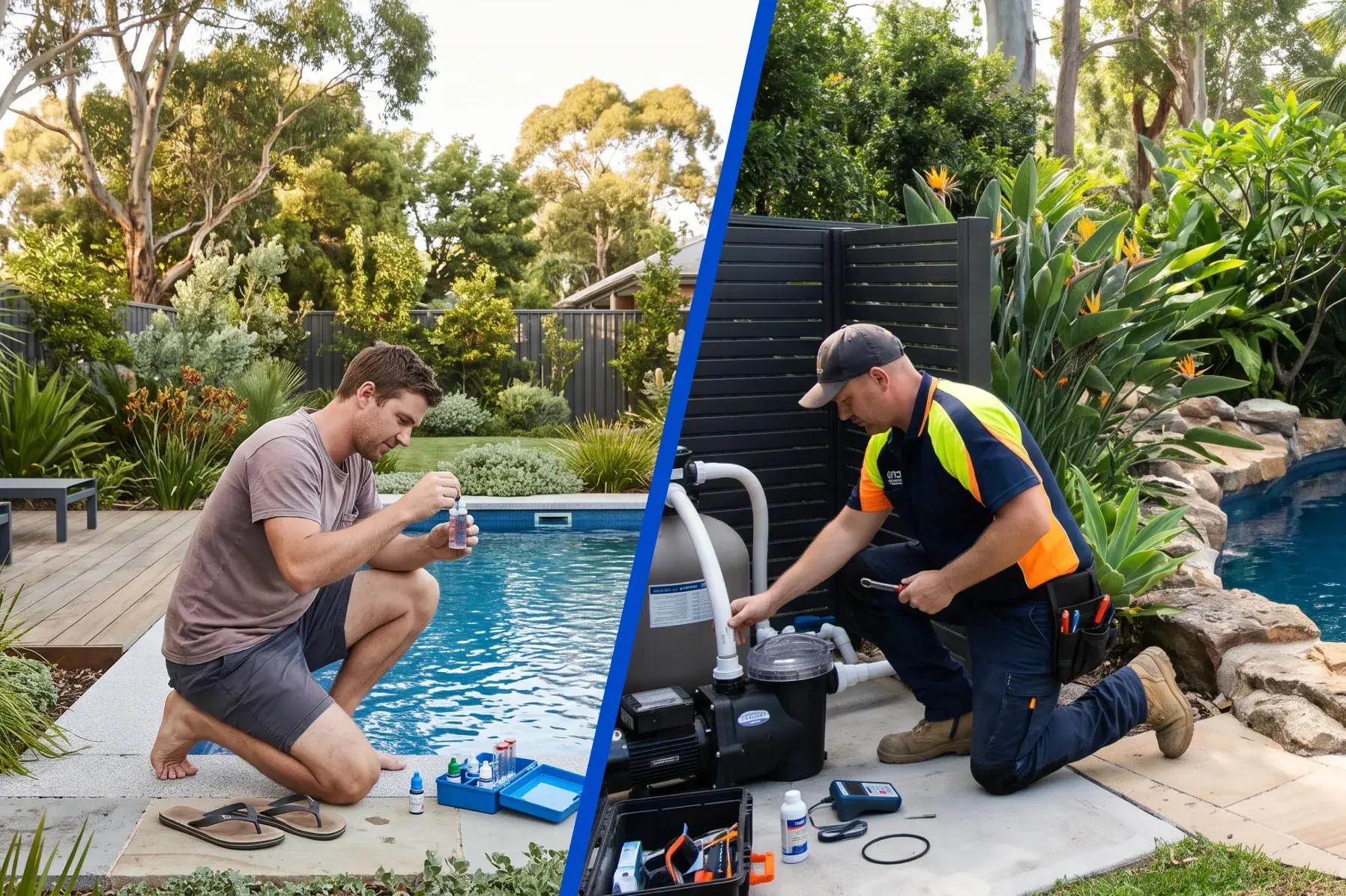
Is it worth paying someone to maintain your pool, or are you better off doing it yourself? With a modern fibreglass pool, particularly one with an automatic chlorinator and robotic cleaner, regular maintenance is pretty straightforward. But even a low-maintenance pool needs some attention, and not everyone wants another job added to their weekend.
Our fibreglass pool maintenance guide explains what's involved in looking after your pool. Here, we'll compare what DIY maintenance actually costs, what you're paying a professional pool service to do, and how much of your own time each option requires. That way, you can decide whether the convenience of a pool service is worth the extra money.
|
Quick Answer Is it cheaper to maintain your pool yourself or pay for a professional pool service? For a typical 8m fibreglass pool, DIY maintenance costs around $300–$500 a year in chemicals, compared with $2,380–$4,010 for a fortnightly full pool service, including an allowance for chemicals. That's a potential saving of $2,080–$3,510 annually. With an automatic chlorinator and robotic cleaner, allow around 15–30 minutes a week for routine DIY maintenance. Electricity and other shared running costs are additional whichever option you choose. For most fibreglass pool owners, DIY is our recommendation, although professional servicing is worthwhile if you'd rather leave the work to someone else. |
How Much Does DIY Pool Maintenance Cost Compared With a Pool Service?
For a typical 8m fibreglass family pool, doing the maintenance yourself can save several thousand dollars a year compared with paying for regular professional servicing.
The chemicals don't suddenly become more effective because they arrive in the back of a pool technician's ute. You're mainly paying for their time, expertise and the convenience of having someone else do the work. And fair enough. Not everyone wants to spend their Saturday fishing soggy leaves out of the skimmer basket.
Here's how the costs compare using typical Australian service prices in 2026.
|
Annual cost |
DIY maintenance |
Fortnightly basic service |
Fortnightly full service |
Weekly full service |
|
Service fee per visit |
$0 |
$65–$90 |
$80–$135 |
$80–$135 |
|
Annual service fees |
$0 |
$1,690–$2,340 |
$2,080–$3,510 |
$4,160–$7,020 |
|
Pool chemicals |
$300–$500 |
$300–$500 |
$300–$500 |
$300–$500 |
|
Annual subtotal |
$300–$500 |
$1,990–$2,840 |
$2,380–$4,010 |
$4,460–$7,520 |
These are planning estimates for a saltwater pool, assuming chemicals are charged separately and the same annual chemical allowance applies to each option. Actual chemical use and charges will vary. A basic service generally covers water testing, chemical balancing and equipment checks, while a full service adds more hands-on cleaning. What's included varies between providers.
Here's where you need to watch the fine print. A $65 pool service sounds pretty attractive until you discover chemicals, vacuuming and other jobs cost extra. There's nothing wrong with paying for a basic service, just make sure you're comparing apples with apples rather than a quick water test with the full "make the pool look respectable before the in-laws arrive" treatment.
You'll also have electricity, water, testing supplies and occasional equipment maintenance costs whichever option you choose. For a modern variable-speed pump, CFPK's typical electricity allowance is around $200–$400 annually. These shared ownership costs aren't included in the table because they don't determine how much you save by doing the maintenance yourself.
For a complete breakdown of pool ownership expenses, see our fibreglass pool cost guide.
What Does a Professional Pool Service Actually Do?
Not all pool services are created equal. Some involve little more than testing your water, adding chemicals and checking the equipment. Others include a thorough clean of the pool itself. It's worth knowing the difference before you start handing over your hard-earned cash.
A basic pool service generally includes testing and balancing the water, emptying the skimmer and pump baskets, and checking that your pump, filter and chlorinator are working correctly.
A full pool service adds the more hands-on jobs, such as removing leaves and debris, brushing the waterline and steps, and vacuuming the pool floor. Depending on the service package, cleaning the cartridge filter or backwashing a media filter may also be included when required.
What about the jobs that aren't included? Equipment repairs, replacement parts, heater servicing and treating a neglected or green pool will generally cost extra. More involved cleaning of filters and chlorinator cells may also attract additional charges, depending on your service agreement.
One thing worth remembering is that a fortnightly service doesn't mean you can completely forget about your pool for the other 13 days. Heavy rain, a weekend full of swimmers or a chlorinator playing up can quickly change your water chemistry. Unfortunately, algae doesn't work to your pool technician's roster!
You'll still need to keep an occasional eye on your water chemistry and equipment between visits, particularly during summer.
How Much Time Does DIY Pool Maintenance Take?
For a modern 8m fibreglass pool with an automatic chlorinator and robotic cleaner, allow around 15 to 30 minutes a week for routine maintenance. That's hardly a second job, particularly when most of the work involves checking the water chemistry, emptying a few baskets and making sure everything is running properly.
Your chlorinator takes care of producing chlorine, your filter removes fine particles, and a robotic cleaner can look after most of the floor and wall cleaning. You'll still need to test your chlorine and pH levels, adjust the chlorinator when necessary and occasionally add chemicals to keep the water balanced.
Then there are the less frequent jobs, such as cleaning your filter cartridge, checking the chlorinator cell and giving the steps and waterline a brush when needed.
So how much time does that add up to? If you spend 20 minutes a week on routine maintenance, another 30 minutes a month on additional cleaning and a couple of hours on seasonal jobs, you're looking at roughly 25 hours a year.
Your backyard and how you use the pool make a difference. Heavy leaf drop, storms and busy summer weekends can push maintenance to 30–60 minutes a week, sometimes more.
How I Maintain My Own Pool
At home in Brisbane, I've got an AstralPool Halo Chlor system that automatically monitors and adjusts chlorine and pH levels. It keeps both balanced, even during summer when the pool gets a serious workout. That means I don't need to test them manually or make weekly trips to the pool shop.
I still pop into my local pool shop once a month for a free water test to check things like calcium hardness, stabiliser and salt levels. They tell me what chemicals I need, if any, and I add them.
We also have plenty of gum trees, so leaves and dust are a constant challenge. I run our Zodiac F-1000 cordless robotic cleaner two or three times a week. I chose this model because its dual-stage filtration captures the fine dust that rides in on the leaves, removing it from the pool rather than simply stirring it up. I also empty the skimmer basket twice a week.
Once a month, I spend about two minutes brushing the waterline and give the equipment a quick check for leaks or anything unusual.
That's pretty much it. The Halo system costs more upfront, but for me, the convenience and savings on professional servicing make it money well spent.
Should You Maintain Your Pool Yourself or Hire a Professional?
For most fibreglass pool owners, we'd recommend doing the maintenance yourself. With an automatic chlorinator and robotic cleaner, there's not a great deal of work involved. Once you're comfortable testing your water and making the occasional chemical adjustment, it's a pretty simple routine. Our pool maintenance checklist will help you get started.
Professional servicing makes sense if you're regularly away from home, have a pool that needs more attention than usual, or simply don't want another household chore. There's no point saving money on servicing if you're going to neglect the pool. That saving can disappear pretty quickly when you're paying someone to rescue it from an algae bloom!
There's also a sensible middle ground. Do the routine testing and cleaning yourself, then call in a pool professional when you need help with equipment maintenance, troubleshooting or something you're not confident tackling.
Ultimately, maintaining a modern fibreglass pool isn't particularly difficult. If you're happy to put in a little effort, DIY is our recommendation. But if paying someone else means your pool gets properly looked after while you enjoy your weekends, that's money well spent too.

Frequently Asked Questions
Will maintaining my pool myself affect my warranty? Absolutely not. Maintaining your pool yourself will not affect your manufacturer's warranty, provided you follow their maintenance instructions and keep your water chemistry within the recommended ranges. In fact, regularly testing and maintaining your pool helps protect your investment and provides a record of proper care should you ever need to make a warranty claim.
Can I use free pool shop water testing instead of paying for a pool service? Absolutely! It's what most DIY pool owners do. Most pool shops offer free water testing because, understandably, they'd like you to buy your chemicals from them. They'll tell you exactly which chemicals you need, how much to add and the order to add them.
If you visit your pool shop weekly, they'll test your chlorine and pH levels as part of the service, so there's generally no need to duplicate those tests at home. However, if you only visit monthly, we recommend testing your chlorine and pH yourself once a week in summer and once a fortnight in winter.
What should I do about pool maintenance when I go on holidays? Before leaving, test and balance your water, empty the baskets and check that your pump and chlorinator are operating correctly. If you're away for several weeks, arrange for someone reliable or a pool technician to check the pool, particularly in summer. Automation is wonderful, but it won't notice a blocked skimmer or failed pump.


