
.svg)









 Affordable Financing
 Fibreglass Pool Install Stages
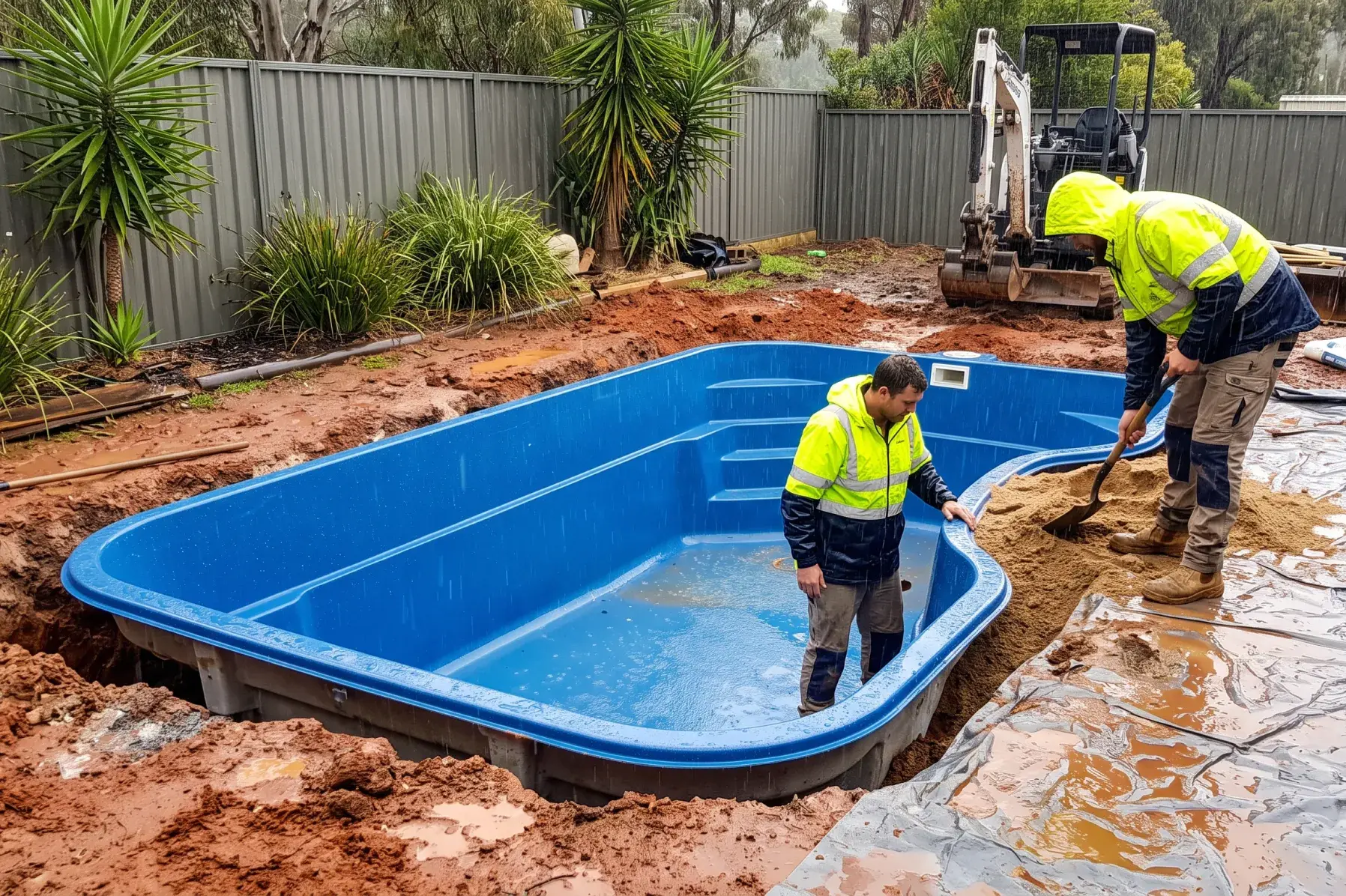
The Aussie weather doesn't read your project timeline. Rain is the installation variable nobody quotes for, and the buffer most overlooked in our Fibreglass Pool Installation Guide. Whether you're DIYing this with your own trades or handing it to a licensed installer, the rules are the same - some stages keep going in the wet, a few stop dead, and a good schedule absorbs the difference.
The Aussie weather does not care about your pool installation timeline.
You can have the shell booked, the excavator lined up, the concreter ready, and then the forecast changes. Suddenly, you are staring at the BOM radar, wondering whether your backyard is about to become a swimming pool before the pool even arrives.
Here is the good news. Pool installation in wet weather is possible, and winter can actually be a smart time to install a fibreglass pool in many parts of Australia.
The catch is timing.
Some stages of the build can continue in light to moderate rain. Others, like excavation, concrete pours, crane lifts in high wind, and saturated backfill, need to pause until conditions are safe and workable. The biggest mistake is not installing in winter. It is excavating too early, leaving the hole open through heavy rain, and then paying to fix collapsed edges, softened bases or muddy access problems.
Whether you are DIY installing your fibreglass pool kit or using a contractor for parts of the job, the same rule applies: plan around the weather-sensitive stages, not the calendar you wish you had.
This article is part of our Fibreglass Pool Installation Guide and explains what stops, what continues, how to read the weather risk, and when to push ahead, pause, or get advice before you start digging.
|
Quick Answer: Can You Install a Fibreglass Pool in Wet Weather? Yes, fibreglass pool installation can happen in wet weather, but excavation, concrete pours, backfilling and crane lifts may need to pause if rain, mud or wind make the site unsafe. Winter can be a smart time to install, provided the hole is not excavated too early and weather-sensitive stages are scheduled carefully. Light rain usually does not stop site set-out, some plumbing, drainage planning, equipment pad preparation or general site work. Heavy rain is the bigger issue, especially on clay-heavy sites, boggy access points or blocks with poor drainage. The aim is not to avoid winter completely, it is to avoid opening the excavation too early and leaving it exposed through bad weather. |
Is Winter a Good Time to Install a Pool in Australia?
Yes, winter can be a very good time to install a fibreglass pool in Australia, as long as the weather-sensitive stages are planned properly.
A lot of homeowners assume pool installation has to happen in spring or early summer. That is understandable, but it also creates the classic pre-Christmas scramble. Everyone wants the pool finished before school holidays, trades are busy, timelines get tighter, and suddenly the backyard dream starts feeling like a renovation episode with too many relatives arriving soon.
Winter can be calmer.
In many parts of Australia, trades may be easier to schedule, crane bookings can be more flexible, and you have more breathing room to complete fencing, paving, landscaping and handover before the first proper swim of summer.
The key is understanding your local conditions. A winter install in parts of Queensland, NSW, WA or SA can be very workable with the right planning. Melbourne and other clay-heavy or wetter sites may need more caution because wet clay can hold water, soften excavation edges and make machinery access harder.
The season itself is not the problem. The risk comes from poor timing, especially digging the excavation too early and leaving it open through rain.
For DIY pool installers, that means your winter plan should start with three questions:
-
Can machinery access the site if the ground gets wet?
-
Does the site drain well, or does water sit in the dig area?
-
Can excavation, shell delivery, backfill and concrete be sequenced close together?
If the answer to those questions is yes, winter may be one of the best times to install your pool. You get the messy work done before summer, you avoid the last-minute rush, and when everyone else is trying to book trades in November, you are already thinking about pool toys, sunscreen and who is bringing the snags.

Which Pool Build Stages Are Weather-Sensitive
Not every stage of a pool build cares about rain. Some jobs can keep moving in light rain. Some need dry ground. Others depend more on wind, access or safety than the rain itself. This is where good scheduling saves you money and stress. The seven-stage sequence (covered in our complete installation guide) splits roughly like this:
|
Stage |
Weather sensitivity |
Why |
|
Site set-out |
Low |
Light rain is usually fine, but heavy rain can wash away markings or make levels harder to check |
|
Excavation |
Medium-high |
Open holes can fill with water, clay walls can slump, and machinery access can become unsafe. |
|
Crane delivery |
High (wind, not rain) |
Light rain may be workable, but high wind can cancel the lift. The crane operator makes the final call. |
|
Plumbing |
Medium |
Pipework may continue if trenches are not filling with water and the site is safe to work in. |
|
Electrical |
High |
Electrical work should only happen when conditions are safe and compliant. Wet areas need extra caution. |
|
Bond beam concrete |
Very high |
Concrete pours should be protected from rain and managed for suitable site and temperature conditions. |
|
Backfill |
High |
Premixed cement stabilised backfill will start curing before being installed |
|
Coping/decking |
Medium |
Mortars, adhesives, coatings and timber finishes generally need suitable dry conditions. |
|
Water fill |
Low |
Rain is not usually a problem once the shell is properly placed and supported. |
|
Pool fencing |
Medium |
Fence work can continue in some conditions, but concrete footings and access may be affected by rain. |
|
Fence certification |
Low |
Inspections can often still happen in wet weather, provided the site is safe and accessible. |
What Pool Installation Work Can Continue in Rain?
A wet day does not always mean a lost day.
On many fibreglass pool sites, light to moderate rain still allows lower-risk work to continue, as long as the site is safe and water is not filling trenches, softening the excavation or making machinery access dangerous.
Work that may continue in light rain includes:
-
Plumbing trench cuts and pipe runs, if the trenches are not filling with water
-
Drainage planning and site grading
-
Equipment pad preparation and pool equipment layout
-
Skimmer box plumbing, once the shell and skimmer are ready
-
Some landscaping preparation, such as soil placement and rough shaping
-
Fence panel preparation, where no concrete footings are being poured
-
Indoor planning tasks, like confirming trade bookings, checking the BOM forecast and reviewing equipment placement
Backfilling may also continue in suitable conditions if the material can be placed and washed in correctly. The keyword is suitable. If the ground is saturated or the backfill material is too wet, pause and let the site dry to a workable condition.
If you are DIY installing, this is where planning pays off. Line up wet-day fallback jobs before the rain arrives. That way, you are not standing in the mud with three tradies, two coffees and no plan, watching the radar like it owes you money.
If you are using an installer, ask how they handle rain days before the job starts. A good operator will have lower-risk tasks ready to bring forward when excavation, concrete or crane work has to move.
What Wet Weather Actually Stops
The genuine stop-work moments are smaller than buyers fear. They are:
-
Heavy rain during open excavation
Excavation is one of the biggest wet-weather risks.If heavy rain hits while the hole is open, water can collect in the base, clay walls can slump, and the excavation may lose its shape. Work usually pauses until the rain clears, the water is pumped out, and the ground is firm enough to continue safely.
This is especially important on clay-heavy sites, sloped blocks or yards with poor drainage.
- High winds on crane day
Light rain does not automatically stop a fibreglass pool shell from being craned into place. Wind is usually the bigger issue.
If the crane operator decides wind conditions are unsafe, the lift will be rescheduled. The pool shell is a large suspended load, and nobody wants it swinging around the backyard like a very expensive backyard kite.
- Rain during concrete pours.
Concrete work needs suitable conditions.
Rain can affect the surface, water content and curing quality of a pour, especially if the concrete is exposed during placement or finishing. Bond beam concrete, paving, coping bases and other structural pours should be protected or rescheduled when conditions are not suitable.
Electrical work in unsafe wet conditions
Electrical work around pools must be handled carefully at the best of times.
Wet conditions can increase risk and may delay some electrical tasks until the area is safe and compliant. Always use licensed trades for electrical work and follow the relevant state requirements.
Severe weather warnings
Storms, hail, lightning, strong wind and severe weather warnings are not “push through it” moments.
The right move is to secure the site, protect open trenches or excavation where possible, check drainage, move loose materials, and restart when conditions are safe.
For most projects, the delay is frustrating but manageable. The expensive problems usually happen when someone pushes ahead through conditions that should have been paused.
Common Mistake: Excavating Too Early Before Rain
One of the easiest wet-weather mistakes is excavating too early.
Once the hole is open, rain can soften the base, fill the excavation, wash material back in, or cause the edges to slump. On clay-heavy sites, this can be worse because clay holds water and can stay soft after the rain clears.
If that happens, the excavation may need pumping, reshaping or re-contouring before the shell can be installed. In plain English, you may end up paying twice to fix the same hole.
Where possible, avoid digging too far ahead of installation. A better approach is often to have the pool shell delivered first, if you have safe room to store it on site, then excavate during the right weather window.
This has two benefits:
-
The excavation is not left open longer than needed.
-
The shell can be measured on site, giving you exact dimensions before the dig starts.
Before you excavate, check the forecast, site access, drainage and timing of your backfill and concrete. If heavy rain is coming, delay the dig. A short delay before excavation is usually cheaper than repairing a wet, collapsed or out-of-shape hole afterwards.
The BOM Playbook: How to Schedule Around Weather
Wet-weather pool installation is mostly about sequencing.
Whether you are DIY installing or using a licensed installer, check the Bureau of Meteorology forecast before each major stage. Do not just look at whether rain is coming. Look at when it is coming and what task is booked next.
A simple wet-weather scheduling rhythm looks like this:
| Forecast | Smart scheduling move |
| Clear 5-day forecast |
Book excavation, shell delivery, backfill and concrete close together. |
| Rain forecast in 2 days |
Bring forward dry-weather tasks where possible and delay opening the excavation if needed. |
| Heavy rain forecast tomorrow |
Avoid starting excavation, pause concrete, and prioritise site protection. |
| Storm warning current |
Secure the site, manage drainage, move loose materials and stop work until safe. |
| Recent heavy rain |
Check access, excavation stability and ground firmness before machinery returns. |
For DIY installers, this is your job as site lead. Check the radar in the morning, confirm what is happening with your trades, and give people notice if the plan needs to change. Concreters, crane companies and electricians are usually booked across multiple jobs, so early communication matters.
If you are using an installer, ask this before you sign:
“How do you handle rain days, and what triggers a reschedule for excavation, crane lifts, concrete or backfill?”
A good operator should be able to answer clearly. The cheapest quote is not always cheaper if there is no weather buffer and every rain delay turns into a variation.
Wet Season Planning by State
Wet weather risk changes across Australia, but rainfall is only part of the story.
The real question is how your site behaves after rain. A flat sandy block with good access may recover quickly. A sloped clay block with tight machinery access may stay soft and messy for days.
Use these notes as a planning guide, not a guarantee.
| State | Wet-weather planning notes |
| Queensland |
The wet season is usually in the summer months, so winter can be a great time to install. Storms and wet-season rain can affect excavation, access and concrete timing, especially in North Queensland. |
| NSW |
Often workable year-round, but coastal rain, poor drainage and sloped blocks can add delays. Sites with heavy rock can also drain poorly once water gets trapped around the excavation. |
| Victoria |
Winter installation is more difficult and needs tighter scheduling, especially around Melbourne and clay-heavy sites. Wet clay can hold water, soften edges and make access harder. |
| WA |
Perth’s wetter months are generally winter, but much of Perth and WA has sandy soil that drains well, so rain is often less of an impediment than on clay-heavy sites. |
| SA |
South Australia has variable soil types, but winter installation is still very manageable with sensible planning. Avoid leaving excavations open through wet spells. |
| Tasmania |
Rain may be more frequent, even when falls are not intense. Winter planning is still workable, but repeated rain can slow access, drying and site preparation. |
| Northern Territory |
Darwin and tropical areas need serious wet-season planning. Where possible, schedule major works outside the monsoon period. |
The key takeaway is simple: do not judge the project by the season alone. Judge it by soil, drainage, access and timing.
Winter can be a smart time to install a fibreglass pool in many parts of Australia. The goal is to use the quieter season to your advantage while keeping the weather-sensitive stages tight and well planned.
Insurance and Wet Weather Damage
Before excavation starts, make sure you understand who carries the risk if wet weather damages the site or delays the work.
If you are using a licensed installer, ask for their certificate of currency and confirm what their public liability and contract works insurance covers. Do not assume every policy responds the same way to flooded trenches, damaged excavation edges, access damage or weather-related delays.
If you are DIY installing, the risk may sit with you. Your standard home insurance may not cover building work, excavation damage or a half-finished pool project. Speak with your insurer before the dig starts and ask whether you need owner-builder or contract works cover.
This is not legal or insurance advice. Read your policy, ask questions in writing, and take photos of the site at the end of each working day.
Planning a Winter Pool Install?
Before you start digging, send us your site photos, access measurements, contour details and any notes about drainage or soil conditions.
We’ll help you choose the right fibreglass pool kit and talk through practical timing considerations, including shell delivery, excavation windows, equipment placement and wet-weather risks.
Book a 20-minute quote call or explore our fibreglass pool kits.

Final Thoughts on Fibreglass Pool Installation in Wet Weather
Fibeglass pool installation in wet weather is absolutely possible, but it needs a smarter plan.
Winter can be a great time to install a fibreglass pool in many parts of Australia. Trades may be easier to book, the pre-Christmas rush is out of the way, and you have more time to finish fencing, paving and landscaping before summer.
The key is not to rush the wrong stages. Keep excavation, shell placement, backfill and concrete close together. Avoid digging too early before rain. Check how your site handles water, especially if you have clay soil, poor drainage, slope or tight machinery access.
A good wet-weather install is not about beating the forecast. It is about working with it.
Before you start digging, get advice on your site, your pool kit and your installation sequence so the project starts on solid ground, not wishful thinking.
Frequently Asked Questions
Can you install a fibreglass pool in wet weather? Yes, fibreglass pools can be installed in wet weather, but some stages may need to pause. Light rain usually is not the issue. Heavy rain, muddy access, unstable excavation, saturated backfill, concrete pours and high winds on crane day are the main things that can delay the job.
Is winter a good time to install a pool in Australia? Winter can be a great time to install a pool in many parts of Australia. Trades may be more available, scheduling can be calmer, and you avoid the pre-Christmas rush. The key is planning around rain, soil type, drainage and keeping excavation, shell placement, backfill and concrete tightly sequenced.
Should I excavate before rain to get ahead? Usually, no. Excavating too early before wet weather can create more problems than it solves. Rain can soften the base, fill the hole, wash material back in or cause the edges to slump. If possible, store the shell safely on site first, then excavate during a suitable weather window.
What happens if it rains after pool excavation? If it rains after excavation, the hole may collect water and the ground may soften. On clay-heavy sites, the sides can slump or lose shape. The site may need pumping, drying, reshaping or re-contouring before the pool shell is installed. This is why timing the dig matters so much.
Can a fibreglass pool be craned in the rain? A fibreglass pool can often be craned in light rain, but wind is the bigger issue. If conditions are unsafe, the crane operator will reschedule the lift. Heavy rain can also delay crane day if the excavation floods, access becomes boggy or the site is unsafe to work on.
Does clay soil make wet-weather pool installation harder? Yes, clay soil can make wet-weather installation harder because it holds water and may stay soft after rain stops. This can affect excavation stability, machinery access and drying time. Melbourne and other clay-heavy areas often need tighter scheduling, especially during winter.
Can muddy access delay pool installation? Yes, muddy access can delay excavation, shell delivery, crane work, backfilling and concrete. Even if the pool area itself is workable, machinery still needs safe access to the site. Tight access, slopes, wet grass, clay or churned-up tracks can all slow the project.
How do I plan a DIY pool installation around rain? Check the BOM forecast before each major stage, especially excavation, shell delivery, backfill and concrete. Avoid opening the excavation too early. If you have safe storage room, consider having the shell delivered first so it can be measured on site before digging during the right weather window.


