









 Affordable Financing
 Fibreglass Pool Install Stages
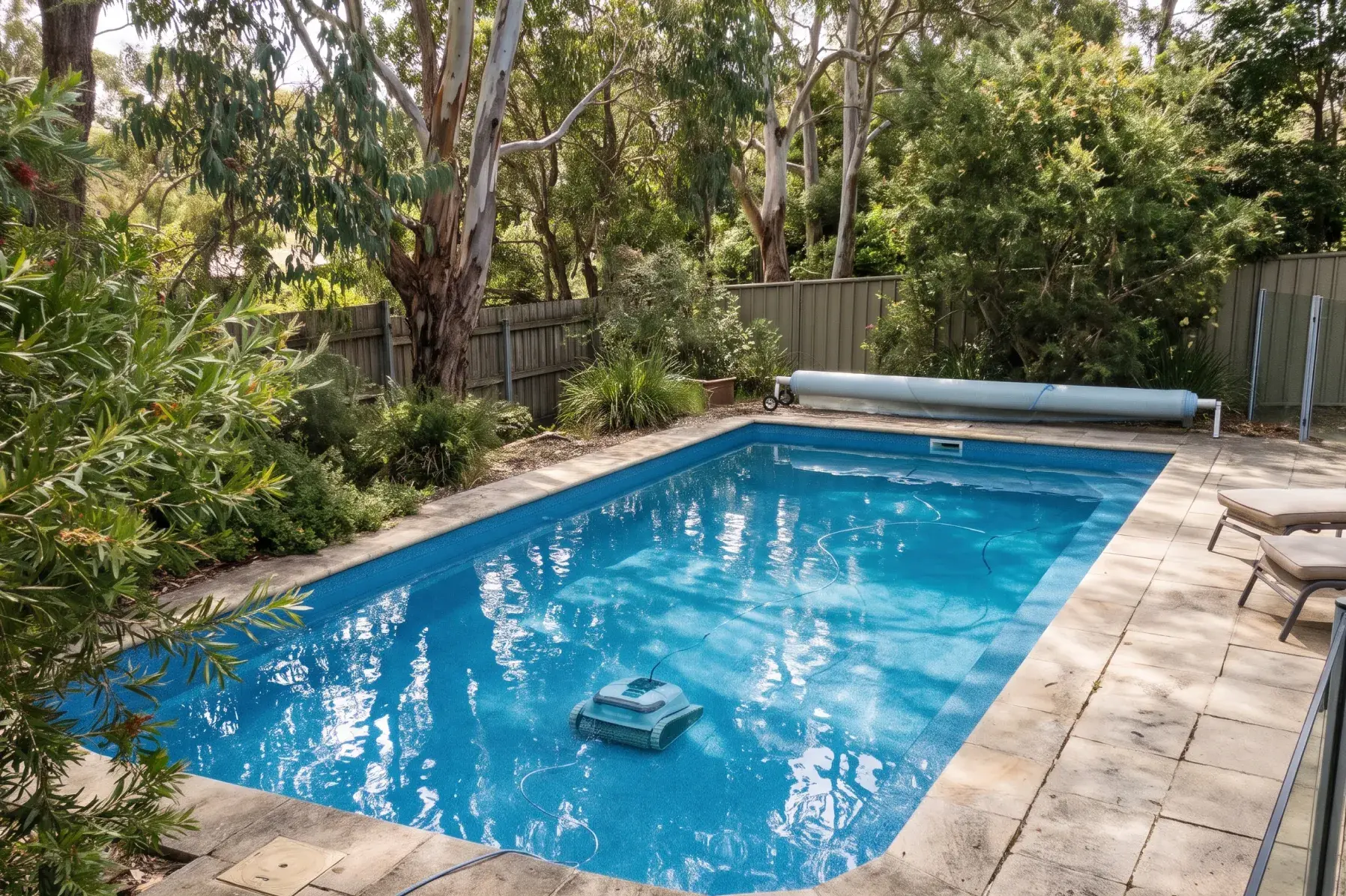
Trees make a backyard look fantastic. Until the wind picks up and your swimming pool becomes the collection point for every leaf, flower, nut and bit of bark in the neighbourhood.
There's another nuisance that catches pool owners by surprise. Leaves carry fine dust and dirt, which washes off when they land in the water. Before long, that dust settles on the pool floor. So, if you've ever wondered where all that dirt keeps coming from, your trees might be delivering it for free.
Leaves and other plant debris can also stain your pool's gelcoat if left sitting for too long. But keeping a pool clean in a leafy backyard doesn't mean spending every afternoon with a net in your hand.
With the right equipment, a few simple maintenance habits and some sensible tree trimming, you can keep the cleaning to a minimum and spend more time enjoying your pool. For the broader maintenance routine, see our fibreglass pool maintenance guide.
|
Quick Answer How do you keep a pool clean when your backyard is surrounded by trees? The easiest way is to reduce the number of leaves falling into your pool, keep your skimmer basket clear and use a quality robotic cleaner to collect debris from the pool floor. A short, high-speed pump cycle later in the day can also help skim floating leaves before they sink. During particularly heavy leaf drop, a pool cover may be worthwhile. With the right setup, even a heavily treed backyard doesn't have to mean daily manual cleaning. |
Why Trees Can Be a Headache for Pool Owners
Not all trees create the same problems for pool owners. Some drop leaves throughout the year, while others save up their efforts for a spectacular seasonal dump. And it's not just leaves you need to worry about.
There are three main problems:
-
Volume and blockages. Gum leaves, jacaranda flowers, paperbark strips and even macadamia nuts can end up in your pool. Large amounts of debris can quickly fill your skimmer basket, restricting water flow and reducing its ability to draw more floating leaves into the basket. Some debris also sinks straight to the bottom, where your skimmer can't collect it.
-
Organic staining. When leaves and other plant material are left in the pool for extended periods, tannins and natural pigments can leach into the water, potentially leaving brown or yellow stains on the gelcoat. This can happen with any pool colour, although stains may be more noticeable on lighter finishes. The good news is that most organic leaf stains on quality gelcoat will fade naturally with normal pool sanitisation or can be removed using a suitable fibreglass-safe stain treatment. If staining has already appeared, see our guide on how to remove organic and metal pool stains.
-
Increased chlorine demand. As leaves and other plant material break down, they introduce organic matter into the water. Your chlorine has more work to do, which can increase chlorine consumption. Heavy leaf loads can therefore affect water chemistry, particularly if debris is left in the pool for extended periods.
The trick is to prevent leaves from accumulating and breaking down in your pool. Fortunately, your pool's existing equipment can do much of the work for you.
A Simple Pool Cleaning Routine for Leafy Backyards
If your pool is surrounded by trees, keeping on top of the leaves is much easier than dealing with a big build-up. But that doesn't mean you need to spend every morning wandering around the pool with a leaf net.
A few simple habits can keep the workload surprisingly light:
-
Trim back overhanging branches. If you've got branches hanging directly over your pool, having them professionally trimmed can save you more cleaning time than buying another piece of pool equipment. You don't necessarily need to remove the tree. Just reducing the amount of foliage above the water can make a big difference. Check local council restrictions before pruning protected trees.
-
Skim when needed. A standard pool leaf net and telescopic pole are all you need to collect floating leaves and larger debris. During heavy leaf drop, a quick daily skim might be worthwhile. At other times, your skimmer box can do most of the work.
-
Let your skimmer do its job. If you have a variable-speed pump, consider programming a short run at high speed later in the afternoon to draw floating leaves into the skimmer basket before they sink. Even five to ten minutes can help, depending on your pool's circulation and skimmer setup.
-
Empty your skimmer basket frequently. As the basket fills with leaves, it restricts water flow and reduces the suction drawing floating debris into the skimmer. Emptying it regularly keeps the water flowing freely and allows your skimmer to collect leaves efficiently.
-
Put your robotic cleaner to work. A quality robotic cleaner can collect leaves and fine debris from the pool floor and, depending on the model and pool design, some steps and benches. This dramatically reduces the amount of manual vacuuming required.
What Do I Do With My Own Pool?
My Brisbane home is surrounded by trees, so we get everything from gum leaves and leopard-tree leaves to flowers and macadamia nuts dropping into the pool. There's also a surprising amount of fine dust that comes down with them.
Rather than cleaning the pool manually every day, we run our Zodiac FR2000 robotic cleaner three times a week. We've also programmed our variable-speed pump to run at high speed for ten minutes at 6 pm, giving the skimmer an extra opportunity to collect leaves that have fallen during the afternoon.
We empty the skimmer basket three times a week, although we'll check it more often when the trees are having a particularly enthusiastic shedding session.
That's our routine, and it works well for our circumstances. Your pool might need a little more or less attention depending on the trees, the season and your equipment.
The important part is finding a routine that prevents debris from building up without turning pool ownership into another household chore.
For the rest of your regular pool care, see our pool maintenance checklist.
Equipment That Actually Makes Leaf Maintenance Easier
You don't need a shed full of expensive pool gadgets to manage leaves. A few well-chosen pieces of equipment will do most of the heavy lifting.
Here's what we recommend:
-
Leaf net and telescopic pole. Nothing fancy required. A standard pool leaf net attached to a telescopic pole is perfect for quickly scooping up floating leaves or retrieving larger debris from the bottom. Every pool owner should have one.
-
A good-quality robotic pool cleaner. If your backyard is surrounded by trees, this is where we'd recommend spending your money. Look for a robot with strong suction, a generous debris collection capacity and, importantly, dual-stage filtration. The first filtration stage collects larger debris such as leaves, while the finer filter traps the dirt and dust that washes off them. For example, Zodiac's FR2000 uses 150-micron and 60-micron filters to collect both larger debris and much finer particles. After all, there's not much point collecting the leaves if you're leaving all their dirt behind. Also look for a collection basket that's large enough for your leaf load and easy to empty and rinse. If you're constantly fishing handfuls of leaves out of a tiny filter compartment, you've simply swapped one cleaning job for another.
What About Solar-Powered Robotic Pool Skimmers?
A relatively new addition to pool maintenance is the floating robotic skimmer. Products such as the Aiper EcoSurfer S2 and Dolphin Skimmi use solar power to cruise around the surface collecting leaves and other floating debris.
It's a clever idea. Rather than waiting for leaves to drift towards your pool's skimmer box, the robot goes looking for them.
However, we'd be a little cautious about rushing out to buy one. While some owners report excellent results, others find that these cleaners can be slow, become caught around pool edges or struggle with certain pool shapes and conditions. They also need their collection baskets emptied.
Our view? If your existing skimmer box and robotic cleaner are keeping your pool clean, you probably don't need another robot patrolling the water. But if floating leaves are a constant problem, they're certainly worth considering.
Is a Pool Cover Worth It in a Leafy Backyard?
If your pool cops a particularly heavy leaf drop, a cover can save you a fair bit of cleaning. But that doesn't mean every pool surrounded by trees needs one. If your skimmer and robotic cleaner are keeping up with the leaves, you might prefer to leave the pool uncovered and enjoy looking at the water.
If you're spending more time removing leaves than swimming, there are two options worth considering.
1. Mesh Leaf Covers for the Non-Swimming Season
A good example is the Daisy WinterKleen Leaf Cover. This mesh cover stretches across the pool, above the water, and attaches to fittings around the surrounding paving.
Rainwater passes through the mesh while leaves, flowers and other debris collect on top, where they can be swept away. It's particularly useful during autumn and winter when the pool isn't being used regularly.
The downside? You'll need to remove and refit the cover whenever you want a swim. Not ideal if you're someone who enjoys a spontaneous afternoon dip.
2. Motorised Hard Slat Pool Covers
If you want something more convenient, a Daisy motorised hard slat cover is worth considering.
These covers use interlocking rigid slats that float on the water's surface. At the press of a button, the motor extends the cover across the pool or retracts it onto a roller.
Daisy also offers an above-ground roller version that can be retrofitted to existing pools without major construction work. It's a particularly attractive option if you use your pool regularly but want to keep most of the falling leaves out between swims.
Of course, this convenience comes at a considerably higher price than a mesh leaf cover. You'll also need to clear accumulated debris before retracting it, or you risk tipping the leaves straight back into the pool. Which rather defeats the purpose!
Whichever cover you choose, always remove it completely before swimming. And remember, a pool cover isn't a substitute for compliant pool fencing.
Our recommendation? If you're not using your pool much during the colder months and have significant leaf drop, a mesh cover is a sensible option. If you swim regularly and want the convenience of covering and uncovering your pool at the press of a button, a motorised slat cover may be worth the additional investment.
And if your existing equipment is handling the leaves without much effort? Save your money and enjoy the view.

Frequently Asked Questions
What Should I Do if a Storm Dumps Heaps of Leaves Into My Pool? Start by removing the larger debris with your leaf net, then empty the skimmer basket and run your robotic cleaner. If there's a particularly heavy build-up, remove as much as possible manually before running your equipment.
It's also worth checking your chlorine levels afterwards, as all that organic material can increase chlorine demand. For advice on maintaining the correct water balance, see our pool chemicals guide.
Can Robotic Pool Cleaners Pick Up Nuts, Seed Pods and Bark? Some can, but it depends on the size and shape of the debris and the cleaner's suction and collection system. Small leaves and flowers are generally straightforward for a quality robot.
Larger nuts, hard seed pods and long strips of bark can cause blockages, so it's better to remove those manually rather than expect your robot to swallow everything the trees throw at it.
Can I Scrub Leaf Stains Off My Fibreglass Pool? A soft pool brush can help with ordinary surface deposits, but avoid abrasive scourers, harsh chemicals or aggressive scrubbing that could damage the gelcoat.
Most organic leaf stains are treatable, so there's no need to attack them with the first cleaning product you find under the laundry sink. For advice on protecting your pool's surface, see our fibreglass pool gelcoat care guide.


