.svg)









 Affordable Financing
 Fibreglass Pool Install Stages
The brochure price gets you most of the way to the truth. The rest is a series of small bills nobody mentions until they happen. Here's the practical 2026 breakdown of hidden pool ownership costs in Australia. These are the line items missing from most quotes. They can be the kind of surprise spend that makes a mess of your beautiful budget spreadsheet. They sit alongside the headline numbers in our Complete Fibreglass Pool Cost Guide, but they deserve their own piece.
|
Quick Answer The hidden costs of pool ownership in Australia include site surprises, pool fencing, council approval, certification, electricity, chemicals, water, insurance, servicing, repairs and equipment replacement. While everyday pool running costs for a self-managed fibreglass pool are often around $500-$1,200 per year, the bigger long-term costs usually come from equipment replacement, heating, excavation issues, fencing and compliance. Over 15 years, pool owners should realistically allow around $20,000-$30,000 for replacement equipment alone, depending on usage, water chemistry, heating and maintenance. |
Site Surprises: The Costs Your Block Decides
Most "hidden" pool costs aren't really hidden. They're variable, which is different. They depend on what your block is doing under the surface, and unless you get a soil test (which we recommend), you don't know until the excavator turns up.
Rock. Brisbane has ironstone. Sydney has sandstone. Adelaide has skeletal soils on rock. Melbourne has basalt in pockets. Hitting rock can add $2,500–$10,000 to an excavation, depending on volume and hardness. A geotechnica (soil test) report ($600–$900) can significantly reduce the risk of major excavation surprises. Knowing in advance means you might be able to move the pool to a rock-free area or get a quote for the additional cost of rock breaking and excavation before you commit to your project.
Slope. A block dropping more than 300mm across the pool footprint typically needs retaining walls to ensure the pool the backfill stays in place after the pool is installed. Depending on how many metres, and the height of the retaining you need, budget between $3,000–$20,000.
Underground services. Sewer, stormwater, gas, water, NBN, electrical mains. Before You Dig Australia helps identify what's there before you submit your permit application to council; relocating any of it costs real money. Re-routing a mains sewer line through a pool footprint is an easy $10,000-$30,000 conversation.
Soil disposal. "Tipping fees" sound like a small line. They aren't. A standard 7m pool produces 50–80 cubic metres of spoil. Dump trucks charge by the hour to be onsite, travel to the tipping site and back to your project for another load. The fee charged by the tipping site is in addition to travel time. If the tip site is a 90-minute drive away, your disposal costs will be a lot more than a project with a tip site just down the road. Depending on the size of your pool and travel time, disposal costs can be anywhere between $1,500–$5,000. If your soil is contaminated (rare, but it happens on older blocks), costs can easily double.
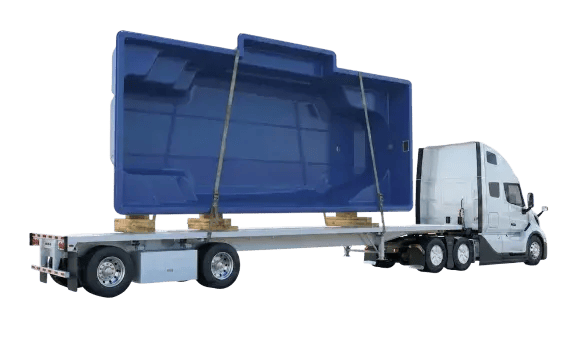
Access. Narrow side access (less than 3m) means a smaller excavator and bobcat will be needed to do the job. This is usually charged by the hour as it is difficult to quote. Smaller equipment equals a longer time to dig the site and load spoil into the truck, which means more money out of your back pocket. If your pool has to be lifted over a two-storey house, trees or powerlines, a bigger crane with a longer reach will be needed. This might add between $2,000 and $10,000 to your project's costs. We've heard of $15,000 access surprises on inner-suburban Sydney jobs where traffic management on busier streets has been required by council.
The fix: If you're using an installer, ask them to do an actual site visit before you sign anything, and request that excavation be quoted as a single figure plus a stated rock-breaking hourly rate.
If you want a real deep dive, head over to fibreglass pool cost in Australia, which walks through all the underlying drivers.
Compliance and Paperwork: The Costs That Aren't Optional
These belong in every budget;
Council approval fees and inspection fees vary significantly between states and councils, so always confirm the current requirements with your local authority or certifier before committing. Budget between $800 and $2,000.
Pool fence certification. Once installed, the fence must be inspected and certified by a registered pool safety inspector against AS 1926.1. Certification fees usually range between $150–$350.
Engineering reports. Site-specific engineering reports are increasingly being requested in Victoria, or if your property has unusual soil or is potentially exposed to floodwaters. Set aside between $400 and $1,200 for this.
Energy efficiency compliance. Some states, NSW in particular, have introduced additional energy-efficiency requirements for new pools, including rules around covers, timers or efficient equipment. Always check your local requirements before building.
The full state-by-state run-down is at council rates and insurance: how much will they increase?.
Equipment Replacement: The Slow-Burn Cost
Pool equipment is a use-and-replace category, not a use-forever category. Realistic 2026 equipment lifespans:
• Single Speed Pool pump: 3-5 years. Replacement: $800–$1,000
• Variable Speed Pool pump: 4-8 years. Replacement: $2,000–$2,500
• Pool filter: 10-15 years. Replacement: $700–$1,800.
• Salt chlorinator cell: 3-5 years (the cell itself, not the controller). Replacement: $700–$1,200.
• Salt chlorinator controller: 8-12 years. Replacement: $1,200–$1,700.
• LED pool lights: 7-10 years per unit. Replacement: $300–$600 per light.
• Heat pump or gas heater: 10-15 years. Replacement: $3,500–$9,000.
• Robotic cleaner: 4-7 years. Replacement: $1,200–$2,500.
• Manual blanket cover: 10 years+. Replacement: $600–$1,500.
Over a 15-year period, most pool owners should expect to replace several major pieces of pool equipment. Based on typical Australian replacement costs, a realistic allowance is around $20,000 to $30,000 in today’s dollars, depending on heating choice, usage, water chemistry and how well the equipment is maintained.
The deep dives on individual equipment choices can be found here: pool equipment buying guide.
Electricity, Water, and Chemicals: The Monthly Drip
These are the costs you'll feel most. They're not really hidden; they just add up. For a mid-size family pool in 2026:
Electricity. A variable-speed pump running 6-8 hours a day costs $200–$400 per year on standard grid power. A single-speed pump can cost $900-$1,400 a year. Pool heating is on top: a heat pump for a Melbourne pool used November-April adds $700-$1,400 a year; gas heating in the same scenario can clear $2,500.
Chemicals. Salt, chlorine top-ups, pH balancer, calcium hardness, stabiliser. $250–$500 a year for a salt-chlorinated pool and more again if your fill water is hard or full of metals.
Water. Top-up water for evaporation and backwash. $40–$120 a year in most climates; up to $300 in hot inland regions or after a draining event.
Pool cover savings. A solar blanket can reduce evaporation by up to 95% and significantly reduce chemical loss. The cover pays for itself in 2-3 years on chemicals and water alone.
The full annual rundown is at running costs: what your pool really costs per year. For the heating-specific economics, is a heated pool worth it?.
Repairs and Resurfacing: The Decade-Plus Costs
Fibreglass pools are low-maintenance compared to concrete and vinyl, but they aren't zero-maintenance.
A quality fibreglass pool with AquaGuard-X™ gelcoat finish can retain its appearance for decades with proper care (polishing above the water line with a quality car paint polish) without needing significant restoration work. Cheaper shells tend to fade or chalk much earlier, even with the right care. If you skip on maintenance, set aside $1,000 to $3,000 every 10 years for a professional polishing or restoration service. If you ended up with a poor quality pool that needs to be resurfaced, this can cost between $4,000–$10,000+ depending on the pool size and condition.
Coping paver repairs. Coping pavers can crack over time and need to be replaced. Buy an extra dozen pavers when installing your pool and stash them in the shed. Hopefully you won’t need them but if the time comes ten years down the track, you’ll be ready to go with matching replacement pavers.
Regrouting pavers. Pool water contains chemicals that can cause the grout between your pool coping pavers to crumble over 10 to 15 years. Repointing (regrouting) can cost between $2,000 and $5,000, depending on the size of the pool.
Decking and surrounds. Timber decking needs oiling every 1-2 years ($300-$800 in supplies, more if outsourced).
Insurance, Rates, and the Bills You Don't See on the Pool
Home insurance premiums. Adding a pool to your policy generally lifts the premium by $50–$300 a year. Most home policies cover pool-related public liability, but excesses and exclusions vary widely. Read your PDS, not just the quote summary.
Council rates. Some councils charge a small annual pool registration or inspection levy ($30-$120). Most don't. Verify with yours.
Property valuation. Pools shift valuations both ways. In hot markets and warmer suburbs (most of QLD, WA, parts of NSW), they typically add 5-8, but that doesn't show up in the rates notice immediately and can affect future land tax bills if you're an investor. The full picture is at how fibreglass pools affect property value.
Public liability if you rent the property. Investment property owners need to verify their landlord insurance covers pool liability, as many policies don't by default.
The Opportunity Costs People Don't Calculate
These aren't hidden costs in the literal sense, but they're the ones that add up long-term.
Time. If you include a weekly trip to the pool shop for a water test, a self-maintained pool is roughly 30-60 minutes a week of hands-on time during the swim season, plus the occasional weekend job. A serviced pool is your weekend back, at $60-$80 per visit ($1,500-$2,100 a year for fortnightly service).
Lifestyle pressure. People often host more when they have a pool. Kids invite friends. Christmas Day grows. Most pool owners count this as a pro, but it's worth knowing.
For finance options to spread the build cost, pool finance: loans vs redraw vs personal loans walks through realistic borrowing costs in 2026.
For the full cost picture of pool ownership. Check out our fibreglass pool cost guide.

Frequently Asked Questions
What's the most commonly missed cost in a pool budget? Fencing, by a long way. Not many pool quotes include the fence by default, and a compliant fence to AS 1926.1 can be relatively affordable for aluminium tubular pool fences ($150-$240 per lineal metre installed) up to a more eye-watering $600-$900 per lineal metre for frameless glass pool fencing.
Are fibreglass pools genuinely cheaper to run than concrete? Fibreglass pools are cheaper to run than concrete pools because the smooth gelcoat surface typically requires less chemical correction and resists algae more effectively. Plus, fibreglass pools do not need to be resurfaced every 10 - 15 years as concrete pools do. A resurface can set you back anywhere between $5,000 and $15,000, depending on the size of the pool. The full comparison sits at fibreglass vs concrete pools.
Can I avoid most of these costs by going DIY? Yes. You can avoid the builder's margin and save thousands by either installing the pool yourself or arranging trades directly. Buying materials such as pavers and pool fencing yourself also cuts out the tradie's margin. You can't avoid council fees, certification or insurance, though.
How much should I budget per year to maintain a fibreglass pool? $500–$1,200 a year is a realistic ongoing operating budget for a self-managed mid-size pool in 2026 that is getting plenty of use. Add $1,500-$2,100 if you're using a fortnightly pool service.
Do hidden costs grow over time? Yes, but predictably. Equipment replacement clusters around years 8-15. A re-coat is a year-20 conversation. Staying on top of maintenance with the small fixes prevents them from becoming expensive replacements.
Want a real budget? CFPK kit quotes spell out exactly what's in the kit and what isn't, so you can plan the trade quotes (excavation, plumbing, crane, fencing etc) on top with no surprises. Get in touch.


